

Mastering Time Management: Essential Strategies for Small Businesses
Listen to this article

Ryan Pease
FOLLOW

Most articles about time management were written for students, remote workers, or individual contributors trying to get more done before dinner. They talk about Pomodoro timers, morning routines, and turning off notifications. That advice is not wrong, but it is incomplete for the founder running a 20-person service business who is simultaneously managing client delivery, answering employee questions, chasing invoices, and trying to think strategically about growth.
For small and medium-sized business owners, time management is not a personal productivity problem. It is an operational systems problem. And solving it requires more than better habits. It requires building the kind of documented, repeatable infrastructure that lets a team manage time effectively without the founder being in the middle of every decision.
This guide covers the strategies, frameworks, and structural fixes that actually move the needle for growing businesses, including the one solution most productivity content never mentions: standard operating procedures.
What Is Time Management (and Why It Breaks Down in Growing Businesses)?
Time management is the process of planning, organizing, and controlling how time is allocated across tasks, roles, and priorities to achieve specific goals. For individuals, that usually means managing a personal schedule. For business owners and managers, it means something far more complex: coordinating how time is spent across an entire team, across multiple projects, and across competing demands that change daily.
The informal habits that work when a business has five employees tend to collapse around the 15-to-20-person mark. When the team is small, the founder knows everything, answers every question, and makes every judgment call in real time. That works because the overhead is low. But as the business grows, those informal habits create invisible bottlenecks. Time decisions that were once quick verbal exchanges become recurring interruptions. Knowledge that lived in one person's head becomes a liability when that person is unavailable.
The hidden cost of undocumented time decisions is significant. Every time a team member has to stop and ask "how do we handle this?" instead of following a documented process, that is time lost. Multiply that across 20 employees and dozens of recurring scenarios, and the cumulative drag on the business is enormous. Good time management at the business level means eliminating those recurring decision loops before they happen.
The Real Effects of Poor Time Management on Small Business Operations
Poor time management in an SMB context shows up in specific, measurable ways that go well beyond missed deadlines or a cluttered inbox.
Founder bottleneck and key-person dependency. When processes are not documented, the founder becomes the answer to every question. Delivery stalls when they are unavailable. Decisions wait for their approval. Growth slows because the business cannot operate without their direct involvement. This is not a leadership problem. It is a systems problem.
Missed handoffs and rework. Without clear processes, work gets handed off inconsistently. One employee does it one way; another does it differently. The result is rework, client complaints, and wasted hours fixing problems that a documented workflow would have prevented entirely.
Revenue ceiling caused by operational drag. Many founder-led businesses hit a growth ceiling not because of a lack of demand, but because operations cannot scale. The team is too dependent on key individuals, too reactive, and too inconsistent to handle increased volume without breaking down. Poor time management at the systems level is frequently the root cause.
Core Time Management Strategies That Work at the Team Level
Individual productivity techniques are useful starting points, but the most effective time management strategies for small businesses operate at the team level. Here are the frameworks worth implementing.
Prioritization Frameworks
The Eisenhower Matrix divides tasks into four quadrants based on urgency and importance. Tasks that are both urgent and important get done immediately. Tasks that are important but not urgent get scheduled. Tasks that are urgent but not important get delegated. Tasks that are neither get eliminated. For business owners drowning in reactive work, this framework is a useful diagnostic tool for identifying where time is being wasted on low-leverage activity.
"Eat the Frog" is the principle of tackling the most important or difficult task first each day, before reactive demands take over. Applied at the team level, this means structuring the workday so that high-value, focused work happens in the morning before meetings and interruptions crowd it out.
Time Blocking and Batch Processing
Time blocking involves reserving specific calendar slots for specific types of work, protecting deep work time from being eroded by meetings and ad hoc requests. For operational teams, this means scheduling recurring tasks in batches. Client check-ins happen on Tuesday afternoons. Reports get processed on Friday mornings. Administrative work gets batched rather than scattered throughout the week. This reduces the cognitive switching cost that comes from constantly shifting between task types.
Async Communication to Reduce Interruption Cycles
Synchronous communication, where everything requires an immediate response, is one of the biggest time drains in growing businesses. Shifting to asynchronous communication protocols, where team members communicate via documented updates, shared systems, and structured check-ins rather than constant real-time messages, dramatically reduces interruption cycles and gives everyone longer stretches of focused work time.
Essential Time Management Skills for Business Owners and Managers
Time management skills are learnable competencies, not innate traits. The most important ones for SMB operators go beyond personal discipline.
Delegation as a Time Multiplier
Delegation is often framed as a soft skill or a trust issue. In practice, it is a systems problem. Most founders struggle to delegate not because they are control freaks, but because the processes are not documented. If there is no written procedure for how a task gets done, delegating it means either accepting inconsistent results or spending just as much time explaining and correcting as doing it yourself. Documented processes make delegation reliable and repeatable.
Goal Setting Tied to Operational Milestones
SMART goals (Specific, Measurable, Achievable, Relevant, Time-bound) are useful, but they need to be connected to operational planning. Setting a revenue goal without identifying the operational milestones required to achieve it means the team is working toward an outcome without a clear path. Effective time management at the business level means translating strategic goals into quarterly priorities and then into weekly execution plans that the team can actually follow.
Boundary Setting and Saying No to Low-Leverage Work
Every hour a founder spends on low-leverage work is an hour not spent on high-leverage activity. Learning to say no to tasks that do not move the business forward, and building systems that handle routine work without the owner's involvement, is one of the highest-return time management skills a business owner can develop.
Individual Time Management vs. Team Time Management: Why SMBs Need Both
Almost every piece of time management advice targets the individual. But small businesses with 10 to 50 employees face a fundamentally different challenge: coordinating how time is spent across multiple roles, departments, and client relationships simultaneously.
Individual time management is about how one person organizes their own schedule, priorities, and focus. Team time management is about how the business allocates collective time across roles and functions, ensures handoffs happen on schedule, prevents bottlenecks from forming, and keeps delivery consistent regardless of who is doing the work.
Both matter. A founder who has mastered personal productivity but has not built team-level time systems will still find themselves pulled back into execution constantly. A team with great processes but no individual discipline will still miss deadlines and drop balls. The goal is to build both layers: personal habits that protect high-leverage time and operational systems that manage team time at scale.
The Founder Bottleneck: When Poor Time Systems Make You the Constraint on Your Own Business
There is a specific time management crisis that affects founder-led businesses, and it is almost never discussed in productivity content. It is the moment when the founder's time becomes the single biggest constraint on business growth.
It happens gradually. The business grows. The team expands. But because processes were never documented, every non-routine situation still routes back to the founder. Client escalations, hiring decisions, delivery questions, vendor negotiations, quality checks. The founder's calendar fills up with operational tasks that should be handled by the team. Strategic work gets pushed to evenings and weekends. Growth stalls because there are only so many hours in a founder's day.
This is not a personal productivity problem. No amount of time blocking or morning routines will fix a business where the founder is structurally required to be involved in every decision. The fix is removing the founder from daily execution loops by building documented systems that give the team the authority and information to handle recurring situations without escalation.
When the team knows exactly how to handle a client complaint, onboard a new employee, or manage a vendor issue, because there is a written process that covers it, the founder's time gets freed for the work only they can do: strategy, relationships, and growth.
How SOPs Solve the Time Management Problem Permanently
Standard operating procedures (SOPs) are the most underutilized time management tool in small business. While productivity apps and scheduling frameworks help individuals manage their own time, SOPs solve the underlying structural problem: recurring decisions and recurring tasks consuming time that should be protected.
Turning Recurring Decisions Into Documented Processes
Every time a team member faces a situation and has to stop to figure out the right approach, time is lost. Every time they ask the founder, more time is lost. SOPs convert those recurring decision points into documented workflows that the team can follow without interruption. The decision gets made once, documented clearly, and then executed consistently by anyone in the role.
Removing the Founder From Daily Execution Loops
When the business has documented processes for client intake, service delivery, quality checks, and team communication, the founder is no longer required at every step. The team has what it needs to execute without constant oversight. This is not about reducing the founder's involvement in the business. It is about shifting their involvement from reactive firefighting to proactive leadership.
Building a Team That Manages Time Without Constant Oversight
A team with clear SOPs knows what to do, when to do it, and how to handle exceptions. That clarity is the foundation of effective team-level time management. Without it, time gets wasted on confusion, rework, and escalation. With it, the team can self-manage their workflows and the business can scale without the founder's time becoming the bottleneck.
Why Time Management Fails Without Documented Processes
Here is the gap that most time management content completely misses: the reason time management fails in growing businesses is not that people lack discipline or the right apps. It is that the business is operating on informal, undocumented systems that force constant improvisation.
When processes are not written down, every recurring task requires someone to remember how it was done last time, or ask someone who knows, or figure it out from scratch. That is an enormous time tax on the business. It compounds as the team grows. It creates inconsistency that leads to rework. And it makes delegation nearly impossible because there is no reliable way to hand off a task and trust it will be done correctly.
Documented processes eliminate that time tax. They are the structural solution to time management, not just a tip to try alongside a Pomodoro timer. When a business has clear, accessible SOPs for its core workflows, time management becomes a matter of execution rather than improvisation.
How to Run a Business Time Audit: Find Where Your Hours Are Actually Going
Before implementing any time management strategy, it helps to understand where time is actually being spent. A business time audit is different from a personal time tracking exercise. It is a structured process for identifying where collective time is being lost across the business.
Here is a practical framework for SMB operators:
Step 1: Map your core workflows. List every recurring process in the business: client intake, service delivery, billing, onboarding, reporting. These are the workflows that should be consuming your team's time.
Step 2: Track actual time for two weeks. Have each team member log how their time is actually spent, not how they think it is spent. Use a simple time-tracking tool or even a spreadsheet. The goal is data, not judgment.
Step 3: Identify the gaps. Compare where time is supposed to go (core workflows) with where it is actually going. Look for recurring interruptions, rework loops, and tasks that route back to the founder unnecessarily.
Step 4: Categorize time by leverage. Sort activities into high-leverage (directly generates revenue or improves delivery), medium-leverage (supports operations), and low-leverage (administrative, reactive, or redundant). Calculate what percentage of the team's collective time falls into each category.
Step 5: Identify the biggest time drains. Look for the recurring tasks and decision points that consume disproportionate time. These are the first candidates for process documentation.
Step 6: Build a remediation plan. For each major time drain, identify the fix: document the process, delegate the task, eliminate it, or automate it. Prioritize the highest-impact items first.
Most business owners who complete this audit are surprised by how much time is consumed by undocumented, informal processes that could easily be systematized. That is the insight that makes the audit worth doing.
Time Management Tools and Systems for SMB Teams
The right tools depend on the size and complexity of the business. Here is a practical breakdown by category.
Planning and Scheduling Tools
Tools like Google Calendar, Calendly, and Reclaim.ai help individuals and teams manage schedules, protect focused work time, and coordinate meetings without the back-and-forth. For operational teams, shared calendars with clear conventions (color coding by task type, blocked deep work time, recurring meeting schedules) are often more effective than complex scheduling software.
Task and Project Management Platforms
Platforms like Asana, Monday.com, ClickUp, and Trello help teams track tasks, manage projects, and maintain visibility across workflows. These tools are useful for coordinating work across team members, but they are most effective when the underlying processes are already documented. A task manager without clear SOPs just makes the chaos more visible.
Process Documentation Platforms
This is the category most time management content ignores entirely. Tools designed specifically for creating and managing SOPs, such as dedicated process documentation platforms, give teams a single source of truth for how work gets done. Unlike generic task managers, these tools are built for capturing institutional knowledge, training new employees, and ensuring consistent execution across the team. For growing businesses, this category of tool has the highest long-term return on investment.
Choosing Tools That Scale
The most common mistake is choosing tools based on features rather than fit. A tool that works well for a five-person team may create more overhead than it eliminates at 30 people. When evaluating tools, prioritize adoption rate (will the team actually use it?), integration with existing systems, and scalability as headcount grows.
Common Time Management Mistakes SMB Owners Make (and How to Fix Them)
The most damaging time management mistakes in small businesses are structural, not personal.
Confusing busyness with productivity. A full calendar does not mean the right work is getting done. The fix is to regularly evaluate whether the work consuming the most time is actually moving the business forward.
Failing to delegate because processes are not written down. If a task cannot be delegated reliably, the reason is almost always that the process is not documented. The fix is to document before delegating.
Solving time problems with more hours. Working longer is not a time management strategy. It is a symptom of a broken system. The fix is to identify and eliminate the root cause of the time drain, not to add more hours to compensate.
Reactive scheduling. When the calendar is driven entirely by incoming requests and urgent fires, strategic work never gets done. The fix is to block strategic time before the week starts and protect it aggressively.
Over-relying on memory and verbal communication. Businesses that run on informal knowledge are fragile. Every time a key person leaves or is unavailable, the business loses capacity. The fix is to document the knowledge before it walks out the door.
How Your Time Management Strategy Must Change as Your Business Scales
Time management is not a static challenge. The strategies that work at 10 employees are not the same ones that work at 30 or 50. Here is how the approach needs to evolve.
At 10 employees: The founder is still involved in most decisions, but the business needs to start documenting its core processes. The priority is capturing institutional knowledge before it becomes a bottleneck. Time management at this stage is primarily about the founder protecting strategic time and beginning to delegate operational tasks.
At 20 to 30 employees: The business has enough complexity that informal coordination breaks down. Handoffs between roles need to be documented. Team-level time management systems, including shared workflows, clear accountability, and regular operational reviews, become essential. The founder should be largely removed from daily execution by this stage.
At 40 to 50 employees: Time management is now a management function, not just a personal habit. Middle managers need the skills and systems to manage their team's time effectively. SOPs need to be comprehensive enough to onboard new employees without heavy founder involvement. The business needs a documented operating system that runs independently of any single individual.
The businesses that navigate this scaling curve successfully are the ones that build their operational infrastructure proactively, before the growing pains force the issue.
Time Management Checklist for SMB Owners and Managers
Use this checklist as a practical starting point for assessing and improving time management across the business.
Weekly Planning
Identify the three highest-leverage tasks for the week before Monday begins
Block deep work time on the calendar before reactive demands fill it
Review the previous week's outcomes and identify where time was lost
Confirm team priorities are aligned with the week's operational goals
Delegation and Process
List every recurring task the founder is still doing that could be delegated
Identify which of those tasks have a documented process (and which do not)
Prioritize documenting the top three undocumented recurring tasks this week
Confirm that each delegated task has a clear owner and a documented process
Team Time Management
Confirm that all team members have clear priorities for the week
Identify any recurring bottlenecks where work is stalling or escalating unnecessarily
Review whether meeting time is proportionate to its value (cut what is not)
Check that handoffs between roles are documented and being followed
Operational Systems
Identify the top three workflows that are causing the most rework or confusion
Confirm that core client-facing processes are documented and accessible to the team
Review whether new employees can onboard without heavy founder involvement
Assess whether the business could operate for a week without the founder present
Time Management FAQs for Business Owners
What are the 4 P's of time management?
The 4 P's of time management are Prioritization, Planning, Performance, and Positivity. Prioritization means identifying the most important tasks and focusing on those first. Planning means organizing time deliberately before the day or week begins. Performance means executing with focus and minimizing distraction. Positivity means maintaining the mindset and energy needed to sustain consistent effort over time. For business operators, the first two, prioritization and planning, have the highest leverage at the team level.
What are signs of poor time management in a team?
Common signs include: missed deadlines and recurring rework, team members frequently asking the same questions about how to handle situations, the founder being pulled into operational decisions that should be handled independently, inconsistent delivery quality across team members, reactive scheduling where urgent tasks constantly crowd out important ones, and high employee frustration due to unclear priorities or unclear processes.
What is the golden rule of time management?
The golden rule of time management is to plan before you act. Specifically, spending time planning and organizing before executing saves significantly more time than it costs. For business owners, this translates to establishing clear priorities, documented processes, and structured schedules before the week's reactive demands take over.
What is the 3-3-3 rule for time management?
The 3-3-3 rule, popularized by productivity writer Oliver Burkeman, suggests structuring each workday around three hours of deep work on the most important project, three shorter tasks or urgent items, and three maintenance activities (emails, meetings, administrative work). For business owners, this framework is useful for protecting strategic work time from being consumed entirely by operational demands.
What are 5 keys to time management?
Five core keys to effective time management for business operators are: (1) Prioritization, knowing which tasks have the highest leverage; (2) Planning, organizing time deliberately before the day begins; (3) Delegation, reliably handing off tasks through documented processes; (4) Focus, protecting uninterrupted time for deep work; and (5) Systems, building operational infrastructure that manages time at the team level rather than relying on individual discipline alone.
What are the 5 principles of time management?
The five principles most widely cited are: clarity (knowing exactly what needs to be done and why), focus (working on one thing at a time without distraction), organization (having systems for tracking and managing tasks), delegation (assigning work to the right people with the right information), and review (regularly evaluating how time is being spent and adjusting accordingly). For SMB operators, organization and delegation are typically the highest-impact areas to improve first.
Building a Business That Manages Time Without You
The ultimate goal of time management for a small business owner is not to become personally more productive. It is to build a business that operates effectively without requiring the owner's constant involvement. That means documented processes, trained teams, clear accountability, and operational systems that scale as the business grows.
Personal productivity habits are a starting point. Prioritization frameworks, time blocking, and async communication all contribute. But they are tactics layered on top of a structural problem that only systems can solve.
When the business has a documented operating system, time management becomes a function of execution, not improvisation. The team knows what to do, how to do it, and what to do when something goes wrong. The founder can focus on the work that actually requires their unique expertise. And the business can grow without hitting the operational ceiling that stops so many founder-led companies in their tracks.
That is what mastering time management actually looks like for a growing small business. Not a better morning routine. A better operating system.
Check out other interesting articles here 👇

Why Free Acceptable Use Policy Templates Destroy Enterprise Value
The Hidden Tax: How Operational Chaos is Bleeding Your Business Dry

The Architecture of Operational Freedom: Engineering a Business That Runs Without You

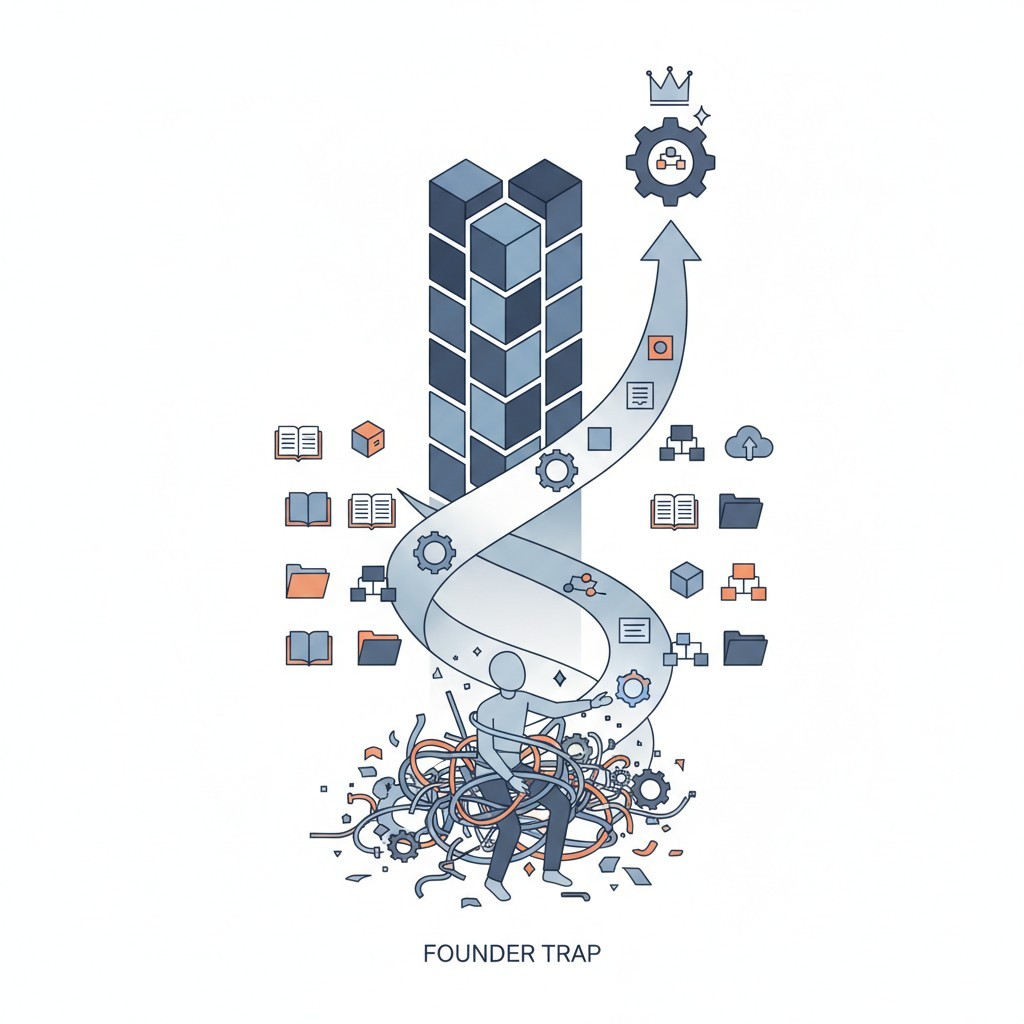
What is an SOP in Business? The Architecture to Escape the Founder Trap

I Built a 6 Million Dollar Company That Couldn't Run Without Me

How to Build a Business That Works (Hint: Systems!)

Employee Onboarding and Training: A Practical Guide for Small and Medium Businesses

How to Write Standard Operating Procedures for Manufacturing: A Field-Proven Blueprint

Essential Quality Control Practices for Operational Excellence

How Standardized Processes Drive Operational Efficiency and Growth