
How Standardized Processes Drive Operational Efficiency and Growth
Listen to this article

Ryan Pease
FOLLOW

A small marketing agency once doubled its client load without hiring extra staff after documenting the way its senior project manager actually executed campaigns. That documentation — not a theoretical workflow but a set of reliable, usable steps — turned tribal knowledge into repeatable action. This change started with implementing standardized processes, and it unlocked faster onboarding, fewer rework cycles, and a clear path to scaling.
What Are Standardized Processes?
Standardized processes are repeatable, documented sequences of tasks that describe how work should be performed to deliver consistent, predictable results. They range from a simple checklist for onboarding a new client to a full-blown operations manual covering quality assurance, escalation rules, and handoffs between teams.
Standardized processes are less about rigid bureaucracy and more about capturing what actually works. Done well, they preserve the know-how that lives in employees' heads, reduce variability, and create a foundation for operational efficiency.
Why Standardized Processes Matter for Small and Medium-Sized Businesses
For founder-led businesses and service firms — where knowledge commonly lives with a few key people — standardized processes are the lever that converts human expertise into organizational capability. Their impact shows up across several important dimensions:
Operational Efficiency: Clear steps reduce wasted time, prevent repeated mistakes, and speed up task completion.
Quality and Consistency: Customers get a consistent experience, and deliverables meet expected standards more reliably.
Faster Onboarding: New hires ramp up faster when there’s a documented way of working.
Scalability: Repeatable processes make it possible to increase throughput without a linear increase in headcount.
Risk Reduction: When procedures are written down, compliance, safety, and knowledge loss become manageable.
Founder Freedom: Removing single-person dependencies frees founders to focus on growth rather than day-to-day fulfillment.
These benefits directly support business scaling strategies and sustainable growth: they enable predictable capacity increases, more reliable margins, and better customer retention.
Common Barriers to Implementing Standardized Processes
Understanding obstacles helps leaders plan around them. Typical barriers include:
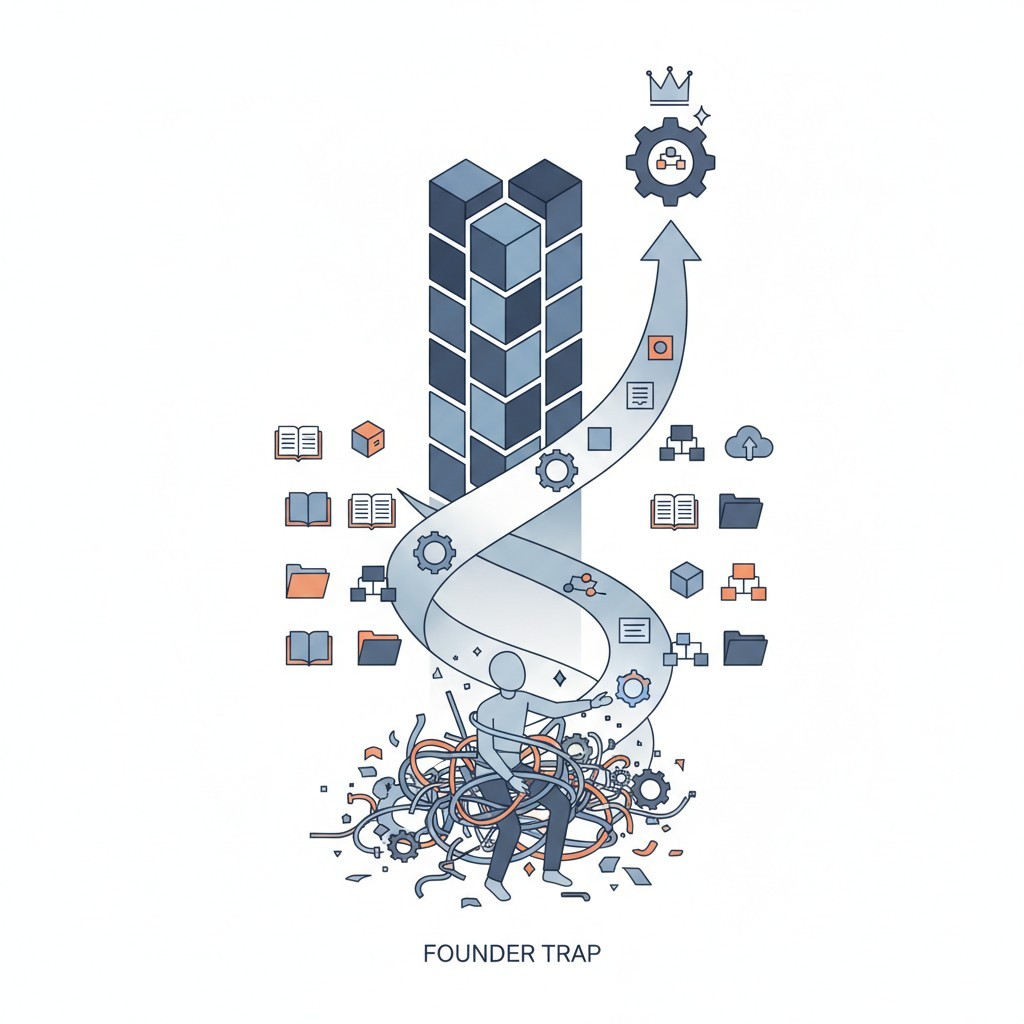
Founder and Key-Person Dependence: Founders often perform critical tasks and resist documentation because it feels like giving up control.
Fear of Rigidity: Teams worry that standardization will stifle creativity or reduce flexibility.
Undocumented Exceptions: Businesses often have lots of “one-off” workflows that make a single, standardized approach feel impossible.
Lack of Ownership: No one is accountable for creating, updating, or enforcing processes.
Tools Mismatch: Using the wrong platform or too many disparate systems can make documentation unwieldy.
Recognizing these barriers early lets a business design a rollout that keeps the team engaged and the process practical.
How to Build Standardized Processes: A Practical Framework
Standardization should feel practical, not academic. The following framework shows how a small or medium-sized business can move from chaos to a reliable operating system.
Discover How Work Actually Gets Done
Start with observation and interviews. Watch the work as it's performed and ask the people who do it to walk through their steps. Prioritize capturing how the task is actually completed — not how leaders think it should be done.
Map and Prioritize Processes
Create a simple process map for each workflow and score processes by impact and frequency. Prioritize processes that block growth — client onboarding, billing, delivery handoffs, quality checks.
Document in Actionable Formats
Use a format that teams will actually use: checklists for repeatable tasks, step-by-step SOPs for complex flows, and short video walkthroughs for tricky handoffs. Keep language simple and include expected outcomes and timing.
Pilot and Refine
Run a short pilot with a subset of the team, collect feedback, and adjust. Pilots reveal edge cases and keep the documentation grounded in reality.
Train and Deploy
Integrate processes into onboarding and regular training. Encourage hands-on practice and create space for questions. Ensure managers hold regular process check-ins.
Measure and Monitor
Track KPIs to prove impact (see next section). Use dashboards or regular operational reviews to highlight trends and performance.
Iterate Continuously
Make process updates routine. Assign owners, use version control, and schedule periodic reviews to keep processes current as the business evolves.
This approach keeps the focus on usable documentation and measurable impact rather than perfection on the first pass.
Give Your Business Some
Mojo
Sign up to receive more goodness from SOP Mojo
What to Measure: KPIs That Show Operational Efficiency and Growth
Metrics turn subjective improvements into rational business decisions. Useful KPIs include:
Cycle Time: Time taken to complete a process from start to finish (e.g., lead-to-contract, order-to-delivery).
Error Rate / Rework: Percentage of tasks that require correction or redo.
Employee Ramp Time: Time to proficiency for new hires.
Throughput: Number of jobs completed per week or month.
Utilization Rate: Percent of billable vs. available time.
Customer Satisfaction (NPS, CSAT): Shows quality and reliability.
Revenue per Employee: Measure of productivity and scaling efficiency.
Churn / Repeat Rate: Especially for service businesses, keeping clients is cheaper than winning new ones.
Example: A bookkeeping firm reduces client onboarding cycle time from 10 days to 3 days after implementing standardized processes, decreasing churn and enabling the team to handle 25% more clients without hiring.
Real-World Examples: How Standardized Processes Produce Results
Concrete stories help clarify how standardized processes play out in practice. The following mini-case studies reflect common scenarios among SOP Mojo’s clients.
1. Creative Agency: From Overworked Founder to Repeatable Delivery
Problem: The founder personally reviewed every campaign, causing a bottleneck. New hires learned on the job, and client deliverables varied in quality.
Action: The agency captured the founder’s review checklist, created a standard campaign workflow, and produced short training videos. They assigned a senior producer as process owner and implemented a weekly QA checkpoint.
Result: Campaign approval cycles dropped by 50%, error rates decreased by 35%, and the agency handled 40% more campaigns within six months without adding to headcount.
2. Field Service Company: Cutting Errors and Improving Scheduling
Problem: Technicians used different repair methods, leading to inconsistent repairs and repeat visits. Scheduling and parts ordering were unreliable.
Action: The company developed standardized diagnostic and repair SOPs, created a parts checklist, and instituted a pre-visit planning routine. They used mobile-accessible SOPs so technicians could reference steps on-site.
Result: Repeat visits for the same issue dropped by 60%, customer satisfaction rose, and dispatch could handle a 20% increase in daily jobs with existing staff.
3. Accounting Practice: Faster Onboarding, Fewer Mistakes
Problem: New staff took nine weeks to reach full productivity, and mistakes from inconsistent reconciliation procedures were common.
Action: The practice documented month-end close, reconciliations, and client onboarding workflows. They created a 30-60-90 training plan built on those SOPs and added competency checks.
Result: New-hire ramp time dropped from nine to five weeks, errors in financial statements fell by 45%, and the firm could take on larger clients with confidence.
Standardized Processes as a Foundation for Scaling a Business
Scaling is not just adding more customers or locations — it's increasing capacity while maintaining quality and margins. Standardized processes are the infrastructure that makes that possible. Here’s how they support different scaling strategies:
Hiring at Scale: Clear playbooks let the organization onboard more employees quickly and consistently.
Multi-Location Expansion: Standard procedures reduce variability when opening new sites or offices.
Productizing Services: Documented workflows reveal repeatable components that can be packaged and priced.
Franchising or Licensing: Franchises need replicable processes to ensure brand consistency across locations.
Mergers and Acquisitions: Standard processes simplify integration and reduce integration risk.
For businesses pursuing sustainable growth, standardized processes supply the predictability investors and buyers value. They also enable more sophisticated business scaling strategies since operations become an asset underpinned by documented playbooks.
Technology and Automation: Tools That Complement Standardized Processes
Tools don’t create processes, but they make them easier to follow, measure, and automate. Common categories include:
Knowledge Bases: Central repositories for SOPs and materials (e.g.,
Notion,Confluence).Checklist and SOP Platforms: Platforms that guide users through tasks step-by-step (e.g., Process Street, Tallyfy).
Project and Workflow Tools: Task management and workflow automation in
Asana,Trello,Jira.Automation Integrators: Tools that automate handoffs between systems (e.g.,
Zapier,Make).Training and LMS: Learning management systems for structured onboarding and competency tracking.
Choosing tools should follow process clarity, not precede it. Start by documenting the workflow, then pick the tool that supports the work. Over-automation before stabilizing the process often just automates wasteful steps.
Best Practices and Common Pitfalls
To get the most value from standardized processes, adopt these best practices and watch out for common mistakes.
Best Practices
Start Small: Prioritize high-impact processes and iterate. A few well-documented workflows beat a big, half-done manual.
Document How People Actually Work: Capture existing best practices rather than imposing theoretical rules.
Use Plain Language: Keep SOPs short, clear, and actionable.
Assign Process Owners: Someone must be accountable for keeping processes current and relevant.
Embed Processes into Daily Routines: Training, check-ins, and performance reviews should reflect process adherence.
Measure Impact: Use KPIs to guide prioritization and justify investment.
Need to kickstart your business? Check out these resources


Common Pitfalls
Over-Documenting: Don’t document every possible exception on day one; capture the common path first.
Rigid Enforcement: Standardization should enable good judgment, not punish deviation when warranted.
Neglecting Change Management: People resist change unless they understand the "why" and see benefits.
Tool Overload: Running SOPs across too many platforms creates version confusion and lowers adoption.
A 90-Day Roadmap for Implementing Standardized Processes
For businesses ready to act, a practical 90-day roadmap keeps momentum and builds early wins.
Days 1–15 — Discovery
Interview founders and key staff, observe workflows, and map top 8–12 processes. Prioritize by impact.
Days 16–30 — Capture
Document the highest-priority processes in usable formats (checklists, short SOPs, video snaps). Create rough training material.
Days 31–60 — Pilot
Run pilots with one team or service line. Measure cycle time, errors, and user feedback. Refine procedures.
Days 61–90 — Rollout
Deploy to the wider organization, integrate SOPs into onboarding, assign owners, and set up reporting on KPIs.
This runway creates momentum while proving value. It’s designed for businesses in the $1M–$10M revenue range that need structure but don’t have enterprise-scale change programs.
How SOP Mojo Helps Businesses Implement Standardized Processes
SOP Mojo focuses on helping small and medium-sized businesses build an operating system they can actually use. Rather than drafting theoretical policies, SOP Mojo extracts how work is actually done, documents those steps, and installs systems so teams can run the business without founder dependency.
Key elements of SOP Mojo’s approach include:
Operational Discovery: Observational interviews and shadowing to capture real-world workflows.
Practical Documentation: User-friendly SOPs, checklists, and training artifacts tailored to the team’s needs.
Implementation Support: Pilots, change management coaching, and hands-on rollout assistance.
Templates and Tools: Reusable templates that reduce the time required to document and standardize critical processes.
For small and mid-sized organizations that match SOP Mojo’s ideal customer profile — founder-led, repeatable delivery, multiple handoffs — this kind of hands-on, reality-based approach often accelerates the path to operational efficiency and sustainable growth.
Balancing Standardization With Flexibility
Standardization doesn’t mean every action must be identical. Effective processes include guardrails and decision points that allow skilled employees to adapt when necessary. A pragmatic model is a “standard path + exception matrix”:
Document the standard path for the majority of cases.
List common exceptions and authorized deviations.
Define escalation rules for truly unusual situations.
This structure keeps work predictable while preserving room for professional judgment — a critical balance for creative and highly skilled teams.
Leadership and Culture: Making Processes Stick
Processes fail when leadership treats them as a one-time project rather than part of the operating model. Leaders should:
Model the Behavior: Use the processes themselves when making decisions and ask teams to do the same.
Celebrate Wins: Publicize improvements in cycle time or customer satisfaction as process milestones are hit.
Invest in Training: Make competency with core SOPs a part of performance reviews and career progression.
Encourage Feedback: Create low-friction channels for employees to propose process improvements.
Over time, a culture of continuous improvement turns processes from static documents into living tools that evolve with the business.
Estimating ROI: What to Expect
Investments in process standardization typically show ROI through reduced errors, faster onboarding, and improved productivity. While results vary, a conservative framework might look like this for a $3M professional services firm:
Cost to implement documentation and rollout: $15,000–$40,000 (consulting, internal time, tools)
Expected benefits in year one:
10–25% reduction in rework and errors
30–50% faster onboarding
10–30% increase in throughput or billable capacity without hiring
Result: Payback often occurs within 6–12 months through increased capacity, lower labor costs per deliverable, and improved client retention.
For many companies in SOP Mojo’s target range, these outcomes justify the investment and support more ambitious business scaling strategies.
Checklist: Which Processes to Standardize First
When unsure where to begin, use this priority checklist:
Client or customer onboarding
Primary service delivery or product fulfillment steps
Billing, invoicing, and collections
Quality assurance and customer sign-off
New-hire onboarding and training
Common escalations and issue resolution
These areas typically yield quick wins in efficiency, customer satisfaction, and reduced risk.
Final Thoughts: Standardized Processes as a Growth Engine
Standardized processes are the operational scaffolding that converts skilled individuals into a scalable organization. They reduce founder dependency, strengthen quality, speed up onboarding, and unlock capacity. For founder-led service businesses and operational firms, process standardization is one of the most practical business scaling strategies available.
SOP Mojo helps businesses move from informal practices to a usable operating system by documenting how teams actually work, installing practical SOPs, and supporting rollout. When processes are grounded in reality and actively maintained, they become a source of sustainable growth rather than a constraint.
Leaders who prioritize standardized processes set their teams up to deliver predictable value, scale responsibly, and focus on strategic growth — not firefighting day-to-day operations.
Frequently Asked Questions
What’s the difference between an SOP and a standardized process?
An SOP (Standard Operating Procedure) is a documented, often step-by-step guide that describes a standardized process. In short, the process is the work itself; the SOP is the documentation that makes the process repeatable and teachable.
How long does it take to see results from standardizing processes?
Early wins can appear within weeks for high-priority workflows (faster onboarding, fewer errors). Meaningful operational improvements and ROI typically show up within 3–12 months, depending on the scope and how rigorously KPIs are tracked.
Will standardization make work less flexible or creative?
Not necessarily. Well-designed processes capture the standard path for most cases while including decision points and authorized exceptions. This balance preserves creative problem-solving while reducing unnecessary variability and preventable mistakes.
Which processes should a small business document first?
Start with high-impact, repetitive processes: client onboarding, core service delivery steps, billing, and new-hire training. These areas usually produce the fastest improvements in efficiency and customer experience.
How should a business maintain and improve SOPs over time?
Assign process owners, schedule regular reviews, collect frontline feedback, and track relevant KPIs. Use version control and keep SOPs short and user-focused. Treat process improvement as ongoing — small, frequent updates beat occasional major overhauls.
Check out other interesting articles here 👇

Why Free Acceptable Use Policy Templates Destroy Enterprise Value
The Hidden Tax: How Operational Chaos is Bleeding Your Business Dry

The Architecture of Operational Freedom: Engineering a Business That Runs Without You

What is an SOP in Business? The Architecture to Escape the Founder Trap

I Built a 6 Million Dollar Company That Couldn't Run Without Me

How to Build a Business That Works (Hint: Systems!)

Employee Onboarding and Training: A Practical Guide for Small and Medium Businesses

How to Write Standard Operating Procedures for Manufacturing: A Field-Proven Blueprint

Essential Quality Control Practices for Operational Excellence
How Standardized Processes Drive Operational Efficiency and Growth