
Understanding Standard Operating Procedures: A Key to Business Success
Listen to this article

Ryan Pease
FOLLOW

Every founder has been there. A key employee quits, a client escalates a complaint, or a simple task gets done completely differently by two people on the same team. The business is growing, but somehow it feels more chaotic, not less. The culprit, more often than not, is the absence of standard operating procedures.
Standard operating procedures (SOPs) are not a bureaucratic formality reserved for hospitals and government agencies. For founder-led small and medium-sized businesses, they are one of the most practical tools available for getting out of the daily grind, reducing costly errors, and building a company that can grow without the owner being the glue holding everything together.
This guide covers everything a business owner or manager needs to know: what SOPs are, how to write them, which ones to prioritize, and how to build a culture where the team actually uses them.
What Is a Standard Operating Procedure (and Why Most SMBs Get It Wrong)
A standard operating procedure is a documented, step-by-step instruction set that tells a specific person or role exactly how to complete a repeatable task to a consistent standard. The key word is "repeatable." If a task happens more than once and involves more than one person, it is a candidate for an SOP.
Here is where many small businesses go wrong: they confuse SOPs with policies, job descriptions, or strategy documents. A policy explains what is allowed or required. A job description explains what a role is responsible for. An SOP explains, step by step, how to actually do the work.
There is also a useful distinction between systems, procedures, and steps. A system is the overarching process (for example, client onboarding). A procedure is one component of that system (for example, sending the welcome email sequence). A step is a single action within that procedure (for example, "Open the email template in HubSpot, insert the client's first name in field one, and click Send"). SOPs live at the procedure level and break down into steps.
The real problem in most founder-led businesses with 10 to 50 employees is not a lack of effort. It is that the knowledge of how things get done lives entirely in people's heads. When the team is small, that works. As headcount grows, informal tribal knowledge breaks down. New hires guess at processes. Experienced staff develop their own versions. The founder gets pulled into firefighting because no one else knows how to handle edge cases. This is the cycle that SOPs are designed to break.
The Core Components of an Effective SOP
A well-built SOP does not need to be long, but it does need to be complete. Here are the essential components that every SOP should include:
Title: A clear, specific name for the procedure (for example, "New Client Welcome Call Process," not just "Onboarding").
Purpose: One to three sentences explaining why this procedure exists and what outcome it produces.
Scope: Who this SOP applies to, and any situations where it does or does not apply.
Roles and responsibilities: Which role or person is responsible for each part of the procedure. This removes ambiguity and prevents the "I thought you were doing that" problem.
Step-by-step instructions: The actual procedure, written in plain language, in the order the steps occur.
Review date: When this SOP should be reviewed and updated, and who owns that review.
Optional additions include a definitions section for technical terms, links to related tools or templates, and a version history. What to leave out is just as important: internal politics, rationale debates, and excessive background context all dilute the document and reduce the chance someone will actually read it.
Detail level matters enormously. An SOP written for a new hire needs more granularity than one written for a senior team member who already understands the context. Over-documenting for an experienced team creates the impression that management does not trust them. Under-documenting for a new hire leaves them guessing. The right level of detail is whatever allows the intended reader to complete the task correctly without asking for help.
SOP Formats: Choosing the Right Structure for Your Business
Not every procedure should be documented the same way. The format should match the complexity of the task and the needs of the person following it.
Simple Steps
A numbered list of sequential actions. Best for straightforward, linear tasks with a single path from start to finish. Example: processing a vendor invoice or sending a weekly report.
Hierarchical Steps
A numbered list with sub-steps nested beneath each main step. Best for more complex tasks where each phase has multiple actions. Example: conducting a client discovery call or running a project kickoff meeting.
Flowcharts
A visual diagram showing decision points and branching paths. Best for processes where the next step depends on a condition or outcome. Example: handling a client complaint, where the path differs based on whether the issue is billing-related or service-related.
Checklists
A simple tick-box list of required items or actions. Best for verification tasks where sequence matters less than completion. Example: a pre-launch checklist before sending a client deliverable or a closing checklist at the end of a workday.
For most founder-led businesses in the $1 million to $10 million revenue range, a combination of hierarchical steps and checklists covers the majority of needs. Flowcharts become more useful as the business grows and processes branch in more complex ways.
How to Write a Standard Operating Procedure Step by Step
Writing an SOP is less about documentation skill and more about knowledge extraction. Here is a practical process:
Identify the process and its owner. Choose a specific, repeatable task. Identify the person who currently does it best or most consistently. That person is the primary source of truth.
Observe or interview the process owner. Watch them do the task, or sit with them and ask them to walk through it step by step as if explaining it to someone brand new. Record the conversation.
Draft the SOP from the end user's perspective. Write as if the reader has never done this before. Use action verbs at the start of each step ("Open," "Click," "Call," "Verify"). Avoid passive voice and vague language like "ensure quality is maintained."
Have the process owner review the draft. They will catch gaps and correct anything that got lost in translation.
Test it with someone who does not already know the process. If a new team member can follow the SOP and produce the correct result without asking questions, it works. If they get stuck, revise.
Assign ownership and a review date. Every SOP should have a named owner who is responsible for keeping it current.
Publish it where the team can find it. An SOP that lives in a folder no one opens is useless. Embed it in the workflow: link to it from the project management tool, include it in onboarding, reference it in team meetings.
SOP Examples by Business Function
Abstract definitions only go so far. Here is what SOPs look like in practice for the types of businesses that benefit most from them:
Client Onboarding SOP
Covers the steps from signed contract to first delivery: sending the welcome email, scheduling the kickoff call, collecting intake information, setting up the client in the project management system, and introducing the delivery team. Without this SOP, every account manager does it differently, and clients notice the inconsistency.
Employee Onboarding SOP
Covers the steps for bringing a new hire up to speed: system access setup, equipment provisioning, introduction to key tools, first-week schedule, and 30-day check-in. This SOP alone can cut the time it takes a new hire to become productive by weeks.
Service Delivery SOP
For a marketing agency, this might cover how a campaign brief is turned into a deliverable: brief review, creative kickoff, draft submission, internal review, client presentation, and revision cycle. For an IT managed service provider, it might cover how a support ticket is triaged, escalated, and resolved.
Invoicing and Accounts Receivable SOP
Covers when invoices are generated, what triggers them, how they are sent, when follow-ups occur, and what happens when a payment is overdue. This prevents revenue from slipping through the cracks because "someone was supposed to send that."
Sales Handoff SOP
Covers what information the sales team must capture and pass to the delivery team when a deal closes. Without this, the delivery team starts every engagement missing half the context the client already shared during the sales process.
Benefits of SOPs for Small and Mid-Sized Businesses
The benefits of standard operating procedures are concrete and measurable, not theoretical. For SMBs specifically, the most important ones are:
Reduced founder dependency. When processes live in documents instead of the founder's head, the owner can step back from daily execution. This is the single biggest leverage point for most growing businesses.
Faster onboarding. New hires can get up to speed in days rather than weeks when they have clear, tested procedures to follow. The business stops relying on "shadow training" from whoever has time.
Consistent delivery quality. Clients receive the same standard of service regardless of which team member handles their account. This protects the brand and reduces complaints.
Easier delegation. When a task is documented, the owner can hand it off with confidence. Without documentation, delegation is just hoping someone figures it out.
Scalable growth. A business that runs on informal knowledge can only grow as fast as it can hire experienced people and hope they absorb the culture. A business with documented systems can grow faster because onboarding is systematic.
Reduced key-person risk. When a critical employee leaves, the business does not lose institutional knowledge with them. The knowledge is in the system, not the person.
Common Challenges When Implementing SOPs (and How to Overcome Them)
The most common reason SOP programs fail in small businesses has nothing to do with writing quality. It has to do with human behavior and organizational habits.
Resistance from experienced staff
Veteran employees sometimes see documentation as a threat to their value or a sign of distrust. The fix is to involve them in writing the SOPs. When the person who knows the process is the one helping document it, they become an advocate rather than a skeptic.
SOPs that get written but never used
This happens when SOPs are created in a documentation sprint and then filed away in a shared drive no one visits. The fix is to embed SOPs directly into the workflow: link to them from task templates, reference them in onboarding, and include them in training. If the SOP is not where the work happens, it will not get used.
Procedures that become outdated
A business changes constantly. Tools get updated, processes evolve, and an SOP written eighteen months ago may no longer reflect reality. The fix is to assign ownership and set a review cycle. Quarterly or semi-annual reviews for high-frequency processes keep documentation from becoming a liability rather than an asset.
SOP Best Practices for Teams That Actually Follow Them
The gap between SOPs that sit in a folder and SOPs that actually change how a team works comes down to a few consistent practices:
Involve the people who do the work. SOPs written by managers who do not do the task are often wrong, incomplete, or impractical. The best source of truth is the person who does the work every day.
Use plain, action-oriented language. Every step should start with a verb. "Complete the intake form" is better than "The intake form should be completed." Remove jargon unless the reader will definitely know it.
Keep it as short as it needs to be, not shorter. The right length is whatever allows the reader to complete the task correctly. Padding adds friction. Missing steps create errors.
Assign ownership to a specific person, not a team. "The marketing team owns this SOP" means no one owns it. Assign it to a named role.
Set a review date and honor it. Treat SOP reviews the same way the business treats financial reviews: scheduled, recurring, and non-optional.
Test before you publish. Have someone unfamiliar with the process follow the SOP from start to finish. Their questions reveal the gaps.
SOP Templates and Tools to Get Started Fast
A simple SOP template in Google Docs or Microsoft Word is enough to get started. The structure should include: title, version number, effective date, purpose, scope, roles and responsibilities, procedure steps, and review date. Nothing more is required to create a functional, usable document.
For businesses with fewer than 20 employees, a well-organized Google Drive or SharePoint folder with a consistent naming convention is usually sufficient. The goal at this stage is to get knowledge out of heads and into documents, not to build a sophisticated system.
As the business grows beyond 20 to 30 employees, dedicated SOP and knowledge management tools like Notion, Trainual, or Process Street can make it easier to organize, assign, and track procedures. These tools also make it simpler to confirm that team members have read and acknowledged specific documents.
The important distinction is between having a template and having a system. A template gives a single document a consistent structure. A system connects all the documents into an operating framework the whole team can navigate and rely on.
How SOPs Remove Founder Dependency and Free You From the Day-to-Day
Most SOP guides frame documentation as a compliance or quality control exercise. For founders of growing businesses, that framing misses the point entirely.
The real pain is this: the founder is the bottleneck. Every decision gets escalated to them. Every edge case requires their input. Every new hire's training depends on their availability. The business cannot scale because it cannot function without the owner in the room.
SOPs solve this problem directly. When the process for handling a difficult client situation is documented, the account manager can handle it without calling the founder. When the onboarding procedure is written down and tested, a new hire can get productive without the owner running every training session. When the sales-to-delivery handoff has a defined protocol, the founder does not need to translate between the two teams every time a deal closes.
This is not just about efficiency. It is about building a business that has value independent of the founder's personal involvement. A business that runs on the owner's knowledge and relationships is not a scalable asset. A business with documented systems, trained teams, and clear accountability is.
The practical starting point is to identify the five to ten tasks that the founder currently handles personally because "it's faster if I just do it." Those are the first SOPs to write. Each one is a step toward a business that runs without the owner in every decision.
Is Your Business Ready for SOPs? A Quick Self-Assessment
Not every business is at the same stage of readiness. Before investing time in documentation, it helps to diagnose where the biggest gaps are. Answer each question honestly:
Do you have repeatable processes that more than one person needs to execute? (Yes/No)
Have you experienced a situation where a key employee's absence caused a significant disruption? (Yes/No)
Do new hires take longer than you would like to become fully productive? (Yes/No)
Are there tasks you find yourself explaining repeatedly to different team members? (Yes/No)
Has a client ever complained about inconsistency in the service they received? (Yes/No)
Do you find it difficult to delegate because you are not confident the task will be done correctly? (Yes/No)
Are there processes in your business where only one person knows how to do them? (Yes/No)
Is your business growing fast enough that keeping up with training feels like a constant struggle? (Yes/No)
If the answer is "Yes" to three or more of these questions, the business has enough operational complexity to justify investing in SOPs. Five or more "Yes" answers suggest that the absence of documented procedures is actively limiting growth and creating risk.
If the answer is "Yes" to all eight, the business is likely experiencing the kind of founder-dependent, knowledge-locked operational strain that SOPs are specifically designed to resolve.
SOPs vs. an Operating System: Why Individual Documents Aren't Enough
Here is a distinction that most SOP guides skip entirely, and it matters a great deal for growing businesses.
Writing an SOP for client onboarding is useful. Writing SOPs for client onboarding, service delivery, employee onboarding, invoicing, quality review, and sales handoff is more useful. But a collection of individual documents is still not a business operating system.
A business operating system is the connected framework of processes, roles, accountability structures, and communication rhythms that allows a team to run the business consistently without constant owner involvement. Individual SOPs are the components. The operating system is how they connect.
Without the operating system layer, SOPs tend to exist in isolation. The client onboarding SOP does not reference the service delivery SOP. The sales handoff SOP does not connect to the project management workflow. Team members follow individual procedures but do not understand how the pieces fit together.
The businesses that get the most from SOP investment are the ones that build an operating system: a structured library of interconnected procedures, organized by function, with clear ownership, regular review cycles, and embedded training. This is the difference between a business that has some documentation and a business that runs on a system.
For most founder-led businesses in the $1.5 million to $8 million revenue range, building this operating system is the work that finally makes sustainable delegation possible.
How to Extract Tacit Knowledge From Your Best Employees Before It Walks Out the Door
Tacit knowledge is the hardest kind to capture. It is the stuff that experienced employees do automatically, the judgment calls they make without thinking, the shortcuts they have developed over years of doing the work. They often cannot describe it because they have never had to. It is just "how they do things."
When that employee leaves, the knowledge leaves with them. This is one of the most common operational crises in growing businesses, and almost no SOP guide addresses how to prevent it.
Here are practical techniques for extracting tacit knowledge before it walks out the door:
The "Teach Me" Interview
Sit with the employee and ask them to teach you the task as if you have never done it before. Record the session. The act of teaching forces people to make implicit knowledge explicit. Ask follow-up questions like "What would you do if X happened?" and "How do you know when it is done correctly?"
Process Shadowing
Watch the employee perform the task in real time. Take notes on every action, including the ones they do automatically. Often, the most important steps are the ones the employee does not think to mention because they are so habitual.
The "What Could Go Wrong?" Conversation
Ask the employee: "What are the three most common mistakes people make when doing this?" and "What do you check before you consider this task complete?" These questions surface the quality judgment that rarely makes it into documentation.
Reverse Engineering From Outputs
Take a finished work product that the employee produced and ask them to walk backward through how they created it. This is especially effective for creative or analytical work where the process is less linear.
The goal is not to replace the employee with a document. It is to capture enough of their knowledge that someone else can reach a competent level of performance without starting from zero.
Getting Your Team to Actually Use SOPs: An Accountability Framework
Writing SOPs is the easy part. Getting a team of 15, 25, or 40 people to actually follow them consistently is where most SOP programs break down. Here is a concrete accountability framework that addresses this:
Step 1: Make SOPs part of onboarding, not an afterthought
Every new hire should complete a structured onboarding process that includes reading, acknowledging, and demonstrating competency in the SOPs relevant to their role. This establishes the expectation from day one that following documented procedures is part of the job.
Step 2: Embed SOPs in the workflow
The SOP should be where the work happens. If the team uses a project management tool like Asana, ClickUp, or Monday, link the relevant SOP directly to the task template. If a process starts with an email, include the SOP link in the email template. Friction is the enemy of adoption.
Step 3: Assign SOP ownership to specific roles
Every SOP should have a named owner who is responsible for its accuracy and currency. That person fields questions about the procedure, updates it when the process changes, and advocates for its use within the team.
Step 4: Review SOP compliance in regular check-ins
Build SOP adherence into the team's regular rhythm. In weekly or monthly team meetings, review any situations where a process broke down and ask whether a documented procedure was followed. If not, explore why. If the SOP was unclear or impractical, update it. If it was ignored, address that directly.
Step 5: Reward documentation and process improvement
Teams follow what gets recognized. When a team member identifies a gap in an existing SOP and suggests an improvement, acknowledge it publicly. When a new hire completes onboarding and demonstrates process competency, celebrate it. Culture follows incentives.
Which SOPs to Write First: A Prioritization Framework for Growing Businesses
A business with 20 employees might have 50 or more processes that could benefit from documentation. Trying to document everything at once is a reliable path to burnout and a folder full of half-finished drafts. The question is not "What should we document?" but "What should we document first?"
Here is a prioritization framework built for resource-constrained SMBs:
Priority 1: Processes where errors have the highest cost
Start with the tasks where a mistake is most expensive: client-facing delivery failures, billing errors, compliance requirements, or safety-critical procedures. Document these first because the return on investment is immediate and measurable.
Priority 2: Processes the founder or a single key person currently owns
Identify every task that only one person knows how to do. These represent the highest key-person risk in the business. Documenting them is not just an efficiency exercise; it is a continuity strategy.
Priority 3: Processes that are repeated most frequently
High-frequency processes have the highest cumulative impact. If a task happens 50 times a month and takes 20 minutes to explain each time it is done wrong, documenting it correctly saves hundreds of hours over a year.
Priority 4: Processes involved in onboarding new team members
If the business is growing and hiring, onboarding-related procedures have an outsized impact on speed-to-productivity. Every week a new hire spends figuring out processes that could have been documented is a week of lost output.
Priority 5: Processes that are causing the most friction or complaints
Ask the team: "What takes the most time to explain? What breaks most often? What do clients complain about most?" The answers point directly to the processes that need documentation most urgently.
A practical starting point for most businesses in the $1 million to $10 million range is to identify the top 10 processes across these five categories and commit to documenting one per week for ten weeks. That is a meaningful operating system in under three months.
Frequently Asked Questions About Standard Operating Procedures
What are the five parts of an SOP?
The five core parts of a standard operating procedure are: (1) Purpose, which explains why the procedure exists; (2) Scope, which defines who the SOP applies to and when; (3) Roles and responsibilities, which assigns accountability for each part of the process; (4) Procedure steps, which provide the sequential, step-by-step instructions; and (5) Review and approval information, which includes the effective date, version number, and scheduled review date. Some SOPs also include a definitions section and links to supporting resources.
What is an SOP with an example?
An SOP is a documented procedure that tells a specific person how to complete a task consistently. For example, a client onboarding SOP for a marketing agency might include steps like: (1) Send the welcome email within 24 hours of contract signing, (2) Schedule the kickoff call within three business days, (3) Create the client folder in the project management system using the standard naming convention, (4) Complete the intake questionnaire during the kickoff call, and (5) Brief the delivery team using the handoff template. Each step is clear, sequential, and actionable.
What is an SOP checklist?
An SOP checklist is a specific format of standard operating procedure that presents the required actions as a list of items to be checked off upon completion. It is best suited for verification tasks, pre-launch reviews, or recurring routines where the goal is to confirm that all required steps have been completed, rather than to guide someone through a complex, decision-heavy process. A closing checklist at the end of a service delivery cycle or a pre-send review checklist for client deliverables are common examples.
How do you write a simple SOP?
Start by identifying the process and the person who does it best. Observe or interview them, recording the steps in sequence. Draft the procedure using plain language and action verbs, writing from the perspective of someone doing the task for the first time. Have the process owner review it for accuracy. Test it with someone unfamiliar with the task. Revise based on what they get stuck on. Assign an owner and a review date, then publish it where the team can find it.
Can I write my own SOP?
Yes. Any business owner or manager can write SOPs using a simple template in Google Docs or Word. The key is to write from the end user's perspective, involve the people who actually do the work, and test the document before rolling it out. Where most self-directed SOP efforts fall short is not in the writing itself, but in creating a connected system of procedures with clear ownership, regular reviews, and genuine team adoption. That is where structured support can make the difference between a folder of documents and an operating system the team actually uses.
How are SOPs different from a business operating system?
An SOP is a single documented procedure for one repeatable task. A business operating system is the connected framework of all the procedures, roles, accountability structures, and communication rhythms that allow a team to run the business consistently. Individual SOPs are the building blocks. The operating system is how they are organized, linked, maintained, and embedded into daily work. A business can have excellent individual SOPs and still lack an operating system if those documents exist in isolation without a shared structure or ownership model.
Building a Business That Runs on Systems, Not on You
The goal of standard operating procedures is not documentation for its own sake. It is operational independence: a business where the team knows what to do, how to do it, and what good looks like, without the founder needing to be in every conversation.
For small and medium-sized businesses in the $1 million to $10 million range, this shift from founder-dependent to system-dependent is often the single most important lever for sustainable growth. It is what makes it possible to bring on new team members without chaos, to deliver consistently without constant supervision, and to eventually step back from daily operations without the business losing momentum.
The importance of SOPs is not theoretical. Every week without documented procedures is a week of accumulated risk: key-person dependency, inconsistent client experience, slow onboarding, and a founder who cannot take a vacation without their phone ringing. Every SOP written and embedded into the team's workflow is a step in the other direction.
The businesses that scale well are not the ones with the most talented founders. They are the ones that figured out how to transfer that talent into systems the whole team can run.
Check out other interesting articles here 👇

Why Free Acceptable Use Policy Templates Destroy Enterprise Value
The Hidden Tax: How Operational Chaos is Bleeding Your Business Dry

The Architecture of Operational Freedom: Engineering a Business That Runs Without You

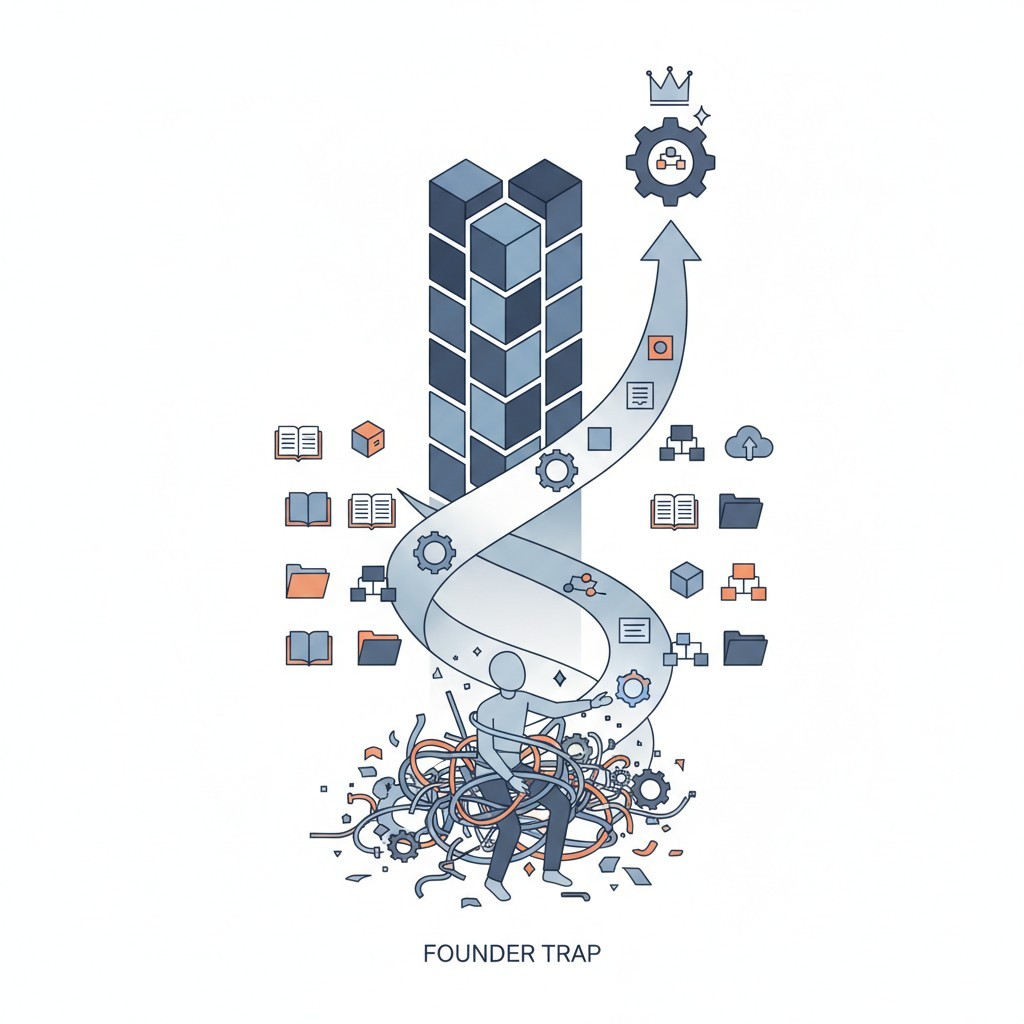
What is an SOP in Business? The Architecture to Escape the Founder Trap

I Built a 6 Million Dollar Company That Couldn't Run Without Me
How to Build a Business That Works (Hint: Systems!)

Employee Onboarding and Training: A Practical Guide for Small and Medium Businesses

How to Write Standard Operating Procedures for Manufacturing: A Field-Proven Blueprint

Essential Quality Control Practices for Operational Excellence

How Standardized Processes Drive Operational Efficiency and Growth