How to Create an Effective SOP Training Program for Your Team
Listen to this article

Ryan Pease
FOLLOW

Most small business owners have been there: a well-intentioned team member makes a costly mistake, and when you dig into why, you discover the answer is painfully simple. Nobody actually showed them how to do it correctly. Maybe there was a document somewhere. Maybe it was emailed out during onboarding. But nobody sat down, walked through it, verified understanding, and confirmed the person could execute it on their own.
That gap between documentation and actual competency is where operational chaos lives. And for founder-led businesses trying to grow past the point where everything runs through one person, closing that gap is not optional. It is the work.
This guide walks through exactly how to build an SOP training program that does more than check a box. One that actually transfers knowledge, builds team confidence, and frees the founder from being the answer to every question.
What Is an SOP Training Program (and Why Most Small Businesses Get It Wrong)?
An SOP training program is a structured system for teaching employees to understand, apply, and consistently follow documented standard operating procedures. The key word is "structured." This is not the same as writing a procedure and sending it to the team in an email. That is documentation. Training is what happens next.
The most common failure mode in founder-led businesses is treating these two things as interchangeable. A founder spends real time documenting a process, shares it with the team, and assumes the work is done. Then six weeks later, the process is being done three different ways by three different people, none of which match what was written.
Why does this happen? Because reading a document and being able to perform a task consistently are completely different cognitive experiences. Documentation creates a reference. Training creates capability.
The cost of skipping structured SOP training is not abstract. It shows up as onboarding delays, quality inconsistencies, client complaints, rework, and a founder who cannot step back because the team keeps needing guidance on things that should already be handled.
SOP Documentation vs. SOP Training: Why the Difference Determines Whether Your Team Actually Follows Procedures
This distinction deserves its own section because confusing the two is genuinely one of the most common reasons SOP programs fail in small and mid-sized businesses.
SOP documentation is the written artifact: the step-by-step procedure, the flowchart, the video walkthrough. It answers the question "what should be done and how?" SOP training is the process of ensuring each team member can answer that question correctly, on their own, under real working conditions.
Think of it this way: a recipe is documentation. Culinary school is training. A chef who has only read a recipe is not the same as one who has practiced the technique under supervision, received feedback, and demonstrated they can produce consistent results.
For growing businesses, this distinction determines adoption. When employees receive a document and are expected to self-direct from there, comprehension is assumed, application is untested, and accountability is absent. When employees go through a proper training program, comprehension is verified, application is observed, and accountability is built into the process from the start.
The practical takeaway: every SOP your business relies on for consistent delivery or client experience needs an accompanying training pathway, not just a file in a shared folder.
Why SOP Training Matters for Growing Businesses
For a business operating between 10 and 50 employees, the operational stakes of inconsistency are significant. At this size, the founder can no longer personally oversee every client interaction or delivery touchpoint. The team has to carry the standard. And they can only carry a standard they have been properly trained on.
A well-built SOP training program delivers three compounding benefits for growing businesses:
Reduced key-person dependency: When institutional knowledge lives in documented, trained procedures rather than in one person's head, the business stops being held hostage by that person's availability.
Faster, more confident onboarding: New hires ramp up faster when they have a structured learning path instead of a pile of documents and a "figure it out" timeline.
Consistent delivery across roles and locations: Whether a business has one location or five, SOP training ensures the standard travels with the procedure, not just with the experienced employee who knows how things "really" get done.
How SOP Training Removes Founder Dependency and Frees You From Daily Operations
This is the angle that rarely gets discussed in generic SOP content, but it is the one that matters most to founder-led businesses. The reason a founder cannot step back from daily operations is almost never a motivation problem. It is a systems problem. Specifically, it is a knowledge transfer problem.
When the way work gets done lives primarily in the founder's head, and even well-documented SOPs have not been properly trained on, every exception, edge case, and judgment call still flows back to the founder. The team is not being negligent. They genuinely do not know what to do without asking.
A structured SOP training program changes this by converting tacit knowledge (the kind that lives in experienced people's instincts) into explicit, teachable, verifiable procedures. Once those procedures are trained on with proper comprehension checks and observed application, the team has genuine capability, not just access to a document.
The result is operational independence. The founder stops being the answer key. The team runs the system. This is not a philosophical shift. It is a direct outcome of building and executing a proper training program.
The Core Components of an Effective SOP Training Program
Regardless of industry or team size, an effective SOP training program contains three essential layers. Skipping any one of them weakens the whole structure.
1. Acknowledgement
Every employee who is trained on an SOP should formally confirm they have read, understood, and agree to follow the procedure. This is not bureaucratic formality. It is an accountability mechanism. An acknowledgement form or digital sign-off creates a record and signals to the employee that this is not optional reading material.
2. Knowledge Check
A short quiz or scenario-based assessment confirms that the employee understood the content, not just that they scrolled to the bottom of the document. Knowledge checks do not need to be elaborate. Three to five questions that test the key decision points in a procedure are usually enough. For complex or high-risk processes, scenario-based questions that ask "what would you do if..." are especially effective at revealing gaps in understanding.
3. In-Field Application
This is the layer most businesses skip, and it is the most important one. Observed practice means a supervisor or experienced peer watches the employee execute the procedure in a real or simulated work environment and signs off that they can perform it correctly. This is where training becomes competency. Without it, a business only knows the employee read the SOP. With it, the business knows the employee can do it.
How to Build Your SOP Training Program Step by Step
Step 1: Conduct a Training Needs Assessment by Role
Start by mapping which SOPs exist and which roles are responsible for executing them. Then ask two questions for each: How frequently is this procedure performed? What is the cost if it is done incorrectly? High-frequency and high-stakes procedures should be prioritized for formal, structured training. Lower-frequency, lower-risk procedures may be suitable for self-study with acknowledgement only.
Step 2: Sequence SOPs by Priority and Frequency
Do not try to train the entire team on every SOP at once. Sequence training by starting with the procedures that affect client delivery, revenue, and safety first. Build the training calendar around operational reality, not alphabetical order.
Step 3: Assign Ownership and Set Completion Timelines
Every SOP training module needs an owner: someone responsible for delivering the training, tracking completion, and following up on gaps. Set clear deadlines. Without them, training completion drifts indefinitely.
Step 4: Deliver Training in the Right Format
Match the training format to the complexity of the procedure and the learning style of the team. More on this in the next section.
Step 5: Verify Comprehension and Sign Off on Application
Run the knowledge check. Observe the in-field application. Collect the sign-off. Do not move a team member to independent execution until all three layers are complete.
Step 6: Schedule SOP Reviews
Build a review cycle into the program from day one. SOPs should be reviewed at minimum annually, and any time a process changes significantly. Employee feedback from training sessions is one of the best sources of improvement data.
Choosing the Right Format for SOP Training Delivery
One of the best practices for SOP training is recognizing that format is not a one-size-fits-all decision. The right format depends on the complexity of the task, the learning preferences of the team, and the conditions under which the procedure will be performed.
Written step-by-step procedures work well for linear tasks with clear decision points and for teams that prefer text-based reference materials.
Flowcharts and visual decision trees are effective for procedures with multiple conditional branches, where the path forward depends on the situation.
Video walkthroughs are highly effective for physical or technical tasks where seeing the procedure performed correctly is more instructive than reading about it. They also work well for remote teams or multi-location businesses.
Hierarchical step formats (major steps with sub-steps nested beneath) work well for complex procedures with multiple phases that need to be executed in order.
Accessibility also matters. Employees need to be able to find and reference SOPs during actual work, not just during training. Whether that means a shared drive, an internal wiki, or a dedicated SOP platform, the system needs to be findable in the moment of need.
How to Sequence SOP Training by Role in a Small or Mid-Sized Team
For a business with 10 to 50 employees, a role-based sequencing approach to developing SOP training is far more effective than a company-wide rollout of everything at once.
Start with the roles that have the highest operational impact and the most frequent client or product touchpoints. In a service business, this is typically the delivery or fulfillment role. In a field-service business, it is the technician or crew lead. Train these roles first, get the program working, and use the lessons learned to refine the approach before rolling out to other roles.
A practical sequencing framework for a 10-50 person team:
Phase 1 (Weeks 1-4): Core delivery roles. The people whose work directly affects the client or customer experience.
Phase 2 (Weeks 5-8): Client-facing support roles. Intake, communication, scheduling, and handoff roles that connect delivery to the client.
Phase 3 (Weeks 9-12): Internal operations roles. Finance, HR, administration, and any roles that support delivery without directly touching the client.
Ongoing: New hire onboarding integrated into the existing program, with role-specific training paths already built.
How SOP Training Drives Productivity and Reduces Errors
The productivity gains from a well-executed SOP training program are not theoretical. They show up in measurable ways across the business.
When team members are properly trained on procedures, they make fewer errors, ask fewer questions, and require less oversight. Decision-escalations to the founder drop significantly because the team knows what to do in common situations. Onboarding time compresses because new hires have a structured learning path instead of an informal apprenticeship. Client delivery becomes more consistent because the standard is no longer dependent on which experienced employee happened to be available.
Perhaps most importantly, the continuous improvement loop becomes accessible. When training is structured, employees can provide specific feedback on where procedures are unclear or where real-world conditions diverge from what the SOP describes. That feedback feeds back into SOP updates, which feed back into better training, which produces better outcomes. This is operational excellence in practice.
The Role of Leadership in Making SOP Training Stick
Leadership buy-in is not a soft factor in SOP training. It is a structural requirement. When managers do not enforce training completion, do not reference SOPs in team meetings, and do not hold themselves to the same standards they expect from the team, the message is clear: the SOPs are optional.
The most effective way to build SOP culture in a growing business involves three leadership behaviors:
Involving employees in SOP creation. When the people who do the work help write the procedure, they understand it better and feel ownership over it. This dramatically improves adoption.
Making managers accountable for training completion. Training completion should be tracked, reviewed in management meetings, and treated as a performance expectation, not a nice-to-have.
Reinforcing SOPs in regular touchpoints. Reference specific procedures in team meetings. Recognize employees who catch a process gap and surface it. Incorporate SOP adherence into performance conversations.
What to Do When Employees Don't Follow SOPs After Training
This is a real operational pain point that rarely gets addressed directly. An employee completes training, signs the acknowledgement, passes the knowledge check, and then two weeks later is doing the task their own way. What now?
The first step is to diagnose before reacting. Non-compliance after training usually falls into one of three categories:
The SOP is unclear or impractical. The employee found a workaround because the documented procedure does not reflect how the work actually gets done. This is a documentation problem, not a people problem. Fix the SOP.
The training did not produce real comprehension. The employee went through the motions but did not genuinely understand the procedure. This is a training design problem. Revisit the knowledge check and observed application components.
The employee is choosing not to follow the procedure. This is a culture and accountability problem. Address it directly, with the acknowledgement form as documentation that the expectation was clearly communicated.
The worst response to non-compliance is ignoring it. When one employee gets away with skipping a procedure, it signals to the entire team that the SOPs are optional. Consistent enforcement, paired with a genuine openness to improving the procedure when it is the SOP that is the problem, is what builds a process-following culture over time.
SOP Training Program Checklist and Role-Based Tracker Template
One of the most practical tools for launching an SOP training program is a simple checklist and tracking system. Here is a framework that works for most small and mid-sized businesses.
8-Step SOP Training Launch Checklist
Identify all active SOPs and map them to roles
Conduct a training needs assessment (priority and risk level for each SOP)
Select training formats appropriate to each procedure
Assign a training owner for each SOP module
Set completion deadlines by role and phase
Deliver training and collect acknowledgement sign-offs
Administer knowledge checks and document results
Complete observed in-field application and record sign-off
Role-Based Training Tracker Template
A basic training tracker should capture the following columns for each employee:
Employee name and role
SOP title and version number
Training delivery date
Acknowledgement sign-off (yes/no and date)
Knowledge check score and date
In-field application sign-off (yes/no, date, and supervisor name)
Next scheduled review date
This tracker can live in a spreadsheet, a project management tool, or an HR platform. What matters is that it is actively maintained and reviewed by management on a regular cadence.
Common SOP Training Mistakes and How to Avoid Them
Treating documentation as training. Already covered, but worth repeating: sharing a document is not training. Build the three-layer program.
No follow-up after initial rollout. Training is not a one-time event. Build in refresher training, especially when SOPs are updated.
Letting SOPs go stale. An outdated SOP is worse than no SOP in some ways, because it trains people to do things incorrectly. Build a review cycle and stick to it.
Training everyone on everything at once. This leads to overwhelm and low retention. Sequence by role and priority.
No accountability system. Without tracking and enforcement, training completion rates will be low and inconsistent. Use the tracker.
Frequently Asked Questions About SOP Training Programs
What does SOP training stand for?
SOP stands for Standard Operating Procedure. SOP training refers to the structured process of teaching employees to understand and consistently execute those documented procedures. It goes beyond reading a document to include comprehension verification, observed practice, and formal sign-off.
What are the 5 components of an SOP?
While formats vary, most effective SOPs include: a title and purpose statement, a defined scope (who the procedure applies to), a list of required materials or prerequisites, the step-by-step procedure itself, and quality or compliance checkpoints. Some SOPs also include a revision history and links to related procedures.
What is the best program to create SOPs?
The best tool is the one the team will actually use. Many small businesses start with Google Docs or Notion for simplicity. Dedicated SOP platforms offer more structure, version control, and training tracking features. The format matters less than the quality of the content and the training program built around it.
How do you implement SOP training in a small business?
Start by identifying the highest-priority procedures for each role, build a simple three-layer training program (acknowledgement, knowledge check, observed application), assign ownership, set deadlines, and track completion. Roll out by role in phases rather than all at once.
What is the difference between an SOP and a training manual?
An SOP is a specific documented procedure for a specific task or process. A training manual is typically a broader collection of information about a role, including multiple SOPs, company policies, and contextual information. An SOP training program uses individual SOPs as the unit of training, building role-specific learning paths from the relevant procedures.
Can AI tools help create and train employees on SOPs?
AI tools can accelerate SOP drafting by helping structure content, suggest steps, and generate first drafts from recorded walkthroughs or notes. However, AI-generated SOPs still require review by the people who actually do the work, and the training program built around them still needs human oversight, especially for the observed application component. AI is a useful starting point, not a replacement for the process of knowledge transfer itself.
Building a Team That Runs the System
The goal of an SOP training program is not compliance. It is capability. When every team member knows what the standard is, understands why it exists, and has demonstrated they can execute it consistently, the business stops depending on any single person to hold it all together.
For founder-led businesses, this is the shift that makes growth possible. Not just hiring more people, but building the systems and training programs that let those people perform at the standard the business requires, without constant oversight.
The work of developing SOP training is not glamorous. It takes time, iteration, and consistent follow-through. But the return is an operation that runs on systems rather than heroics, and a founder who can finally step back from daily firefighting and focus on what actually moves the business forward.
Check out other interesting articles here 👇

Why Free Acceptable Use Policy Templates Destroy Enterprise Value
The Hidden Tax: How Operational Chaos is Bleeding Your Business Dry

The Architecture of Operational Freedom: Engineering a Business That Runs Without You
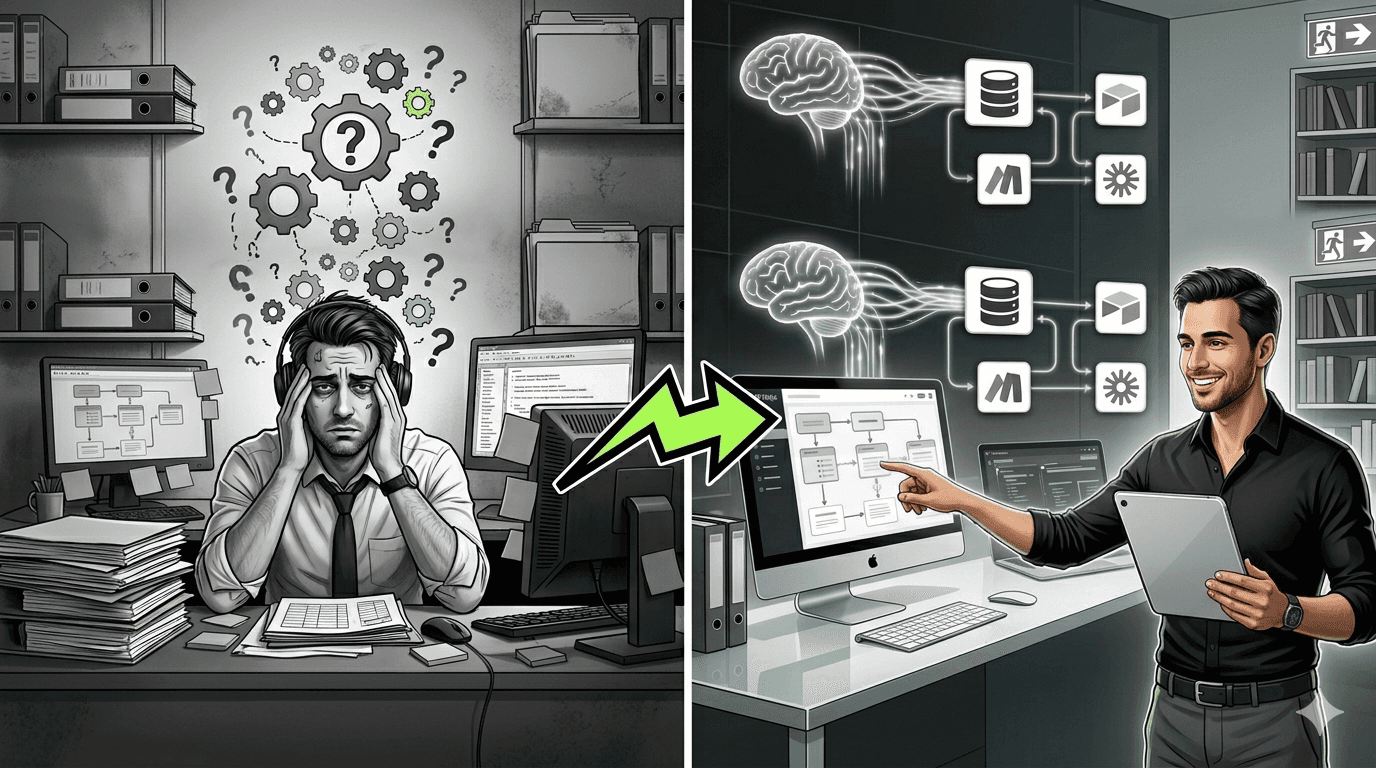
What is an SOP in Business? The Architecture to Escape the Founder Trap
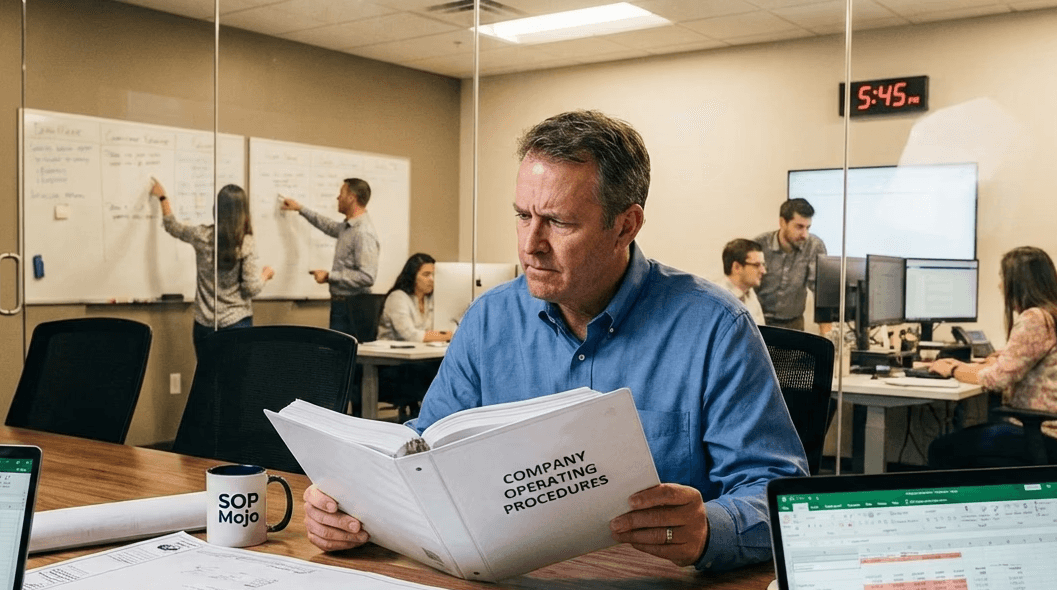
I Built a 6 Million Dollar Company That Couldn't Run Without Me
How to Build a Business That Works (Hint: Systems!)
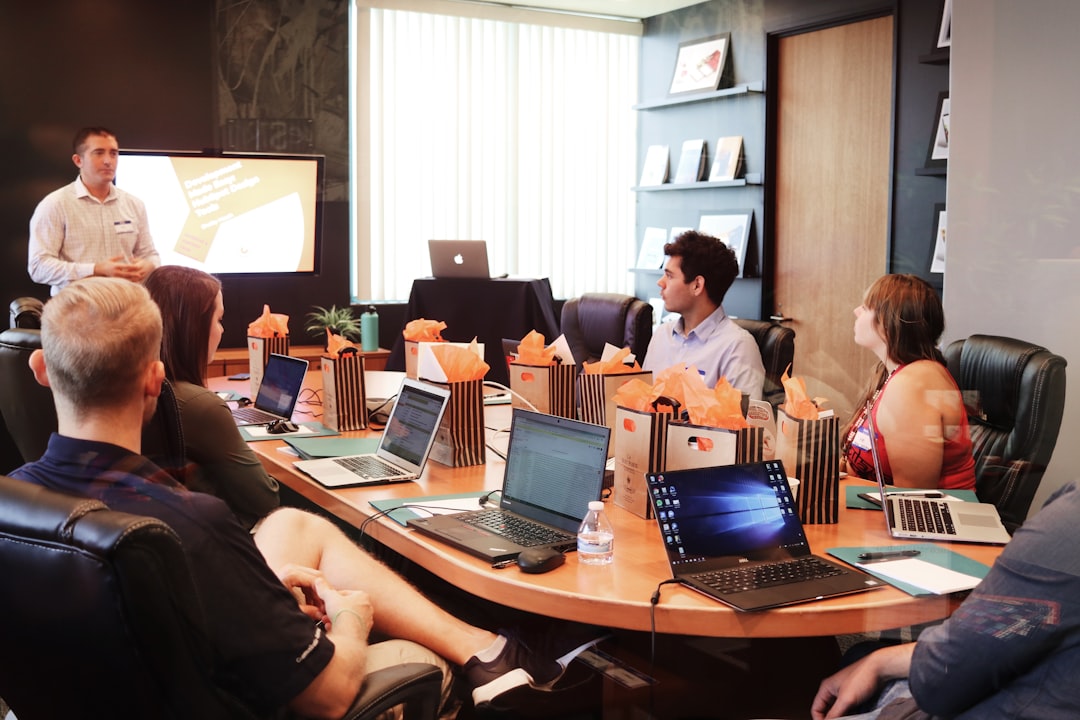
Employee Onboarding and Training: A Practical Guide for Small and Medium Businesses

How to Write Standard Operating Procedures for Manufacturing: A Field-Proven Blueprint

Essential Quality Control Practices for Operational Excellence

How Standardized Processes Drive Operational Efficiency and Growth