
Quality Control vs Quality Assurance: Key Differences Explained
Listen to this article

Ryan Pease
FOLLOW

Quality control vs quality assurance often get used interchangeably, yet they occupy distinct roles within a company's quality management system. Understanding the difference between quality control and assurance helps business owners reduce rework, keep customers satisfied, and scale operations without founder bottlenecks.
Why this distinction matters for small and mid-size businesses
For owner-led service and operational businesses, mistakes aren’t just embarrassing — they cost money, time, and client trust. Many of these companies rely on institutional knowledge that lives in founders' heads or veteran employees’ notebooks. That’s where a clear quality framework, supported by well-written standard operating procedures (SOPs), makes a real difference. Firms like SOP Mojo specialize in extracting how a business actually works, converting it into usable SOPs, and installing an operating system teams can follow — which bridges the gap between quality assurance and quality control in daily practice.
What Is Quality Assurance?
Quality assurance (QA) is the proactive, system-level work that makes good outcomes likely. It focuses on designing processes and systems so that work gets done the right way from the start. QA answers questions like: Are processes defined? Is training consistent? Are handoffs clear?
Key characteristics of QA
Preventive: It prevents defects or service failures by improving processes.
Process-oriented: It concentrates on how work is done rather than inspecting finished results.
System-level: It includes policies, SOPs, training programs, and continuous improvement cycles.
Long-term focus: It reduces variability and improves overall capability over time.
Typical QA activities
Mapping processes and documenting SOPs.
Designing onboarding and ongoing training programs.
Creating process owners and role clarity.
Running process audits and capability assessments.
Implementing continuous improvement methods (e.g., PDCA, Kaizen).
Example: QA in a marketing agency
A marketing agency builds a standardized campaign intake workflow, complete with approval gates, client briefing templates, and time-boxed review cycles. These process design choices and the training that supports them are QA activities — they reduce variability so campaign deliveries become predictable.
What Is Quality Control?
Quality control (QC) is the reactive, product- or service-level validation that verifies outcomes meet defined standards. It inspects deliverables, detects defects, and triggers corrective actions when work falls short.
Key characteristics of QC
Detective: It finds deviations from standards after (or during) execution.
Output-focused: It concentrates on the final product or service delivered to the client.
Short-term interventions: It often involves checklists, inspections, tests, or peer reviews.
Feedback loop to QA: QC results inform process improvements and training.
Typical QC activities
Final inspections and checklists (pre-shipment checks, QA reviews).
Peer reviews and sign-offs for deliverables.
Sampling and acceptance testing.
Recording defects and initiating corrective action reports.
Example: QC in a field service company
A field service technician completes a repair and follows a pre-closeout checklist verifying torque specs, safety tests, and customer sign-off. That checklist and inspection are QC — confirming the job meets requirements before the technician leaves site.
Quality Control vs Quality Assurance: Key Differences
Here’s a clear way to think about the distinction: quality assurance builds the road; quality control checks whether cars stay on it.
Side-by-side comparison
Purpose: QA prevents problems; QC detects and corrects problems.
Focus: QA focuses on processes; QC focuses on outputs.
Timing: QA is continuous and proactive; QC happens during or after execution.
Tools: QA uses SOPs, training, audits; QC uses checklists, tests, inspections.
Metrics: QA tracks process capability and adoption; QC tracks defect rates and rework.
Ownership: QA is often owned by process owners or operations leadership; QC can be owned by frontline supervisors, QA specialists, or independent inspectors.
How they interact
Quality control and quality assurance are complementary. QC exposes what’s not working; QA changes the systems to reduce those failures. Effective organizations set up a feedback loop where QC findings feed into QA activities — for instance, frequent QC failures on a checklist trigger a process review and an updated SOP.
Quality Management Terms Worth Knowing
A concise glossary of essential quality management terms helps avoid confusion on the shop floor and in management meetings.
SOP (Standard Operating Procedure): A documented process that tells staff how to perform routine tasks consistently.
Process Owner: The person accountable for a given process’ performance and continuous improvement.
Control Plan: A structured way to show critical process steps, controls, and monitoring points.
Corrective Action: Steps taken to eliminate the cause of a detected nonconformity.
Preventive Action: Actions taken to remove the cause of potential nonconformities.
Root Cause Analysis (RCA): A method for finding the underlying cause of a problem, such as 5 Whys or fishbone diagrams.
PDCA (Plan-Do-Check-Act): A continuous improvement cycle useful in QA work.
Practical Best Practices for Small and Mid-Size Businesses
Smaller organizations can get big gains from small, focused quality initiatives. The emphasis should be on making processes visible, repeatable, and auditable without overburdening teams with bureaucracy.
1. Start with the critical processes
They should map their core delivery processes first — the ones where mistakes cause the most customer harm or cost the most money. For a service firm, that might be client onboarding and project handoffs. For a contractor, it might be scheduling and field execution.
2. Document SOPs that people actually use
Too many SOPs are long, academic, and quickly abandoned. Good SOPs are:
Short and task-focused
Written in plain language
Include decision points and examples
Linked to checklists and templates
3. Build simple, consistent QC checkpoints
Instituting lightweight QC controls — a peer review, a sign-off checklist, or a handoff verification — prevents small mistakes from becoming big problems. These should be quick to perform and easy to audit.
4. Assign clear ownership
Each SOP and control should have an owner. That person is responsible for training, monitoring KPIs, and initiating improvements based on QC data. Ownership prevents the “nobody’s job” problem.
Give Your Business Some
Mojo
Sign up to receive more goodness from SOP Mojo
5. Use data to prioritize fixes
Track basic KPIs (below) and let Pareto analysis guide where to focus improvement effort. If 80% of rework comes from 20% of tasks, fix those tasks first.
6. Build continuous improvement into routines
Regular retrospectives, monthly process reviews, and a lightweight RCA methodology keep QA work active. It’s far better to schedule a 30-minute monthly review than to wait for a crisis.
7. Train, test, and certify
Training should be paired with a short competency check — a quick test or walk-through — so teams prove they can perform the SOP. Certifications may be informal (a checklist signed off by a manager) but must be tracked.
Metrics and KPIs: What to Track
Choosing the right metrics separates meaningful quality programs from busywork. Mixing QA and QC metrics gives a fuller picture.
Useful QA metrics
Process adoption rate (percentage of tasks performed per SOP)
Training completion and competency pass rate
Time-to-proficiency for new hires
Number of process changes and cycle time to implement improvements
Useful QC metrics
Defect rate (per 1000 tasks or per job)
Rework rate and cost of rework
First-pass yield (percentage of tasks accepted without rework)
Customer complaints and severity
On-time completion rate
How to tie them together
QC metrics should feed into QA metrics over time. For example, if defect rate drops after a new SOP and training are implemented, the data validates the QA investment. Visual dashboards that show both process adoption and defect trends create transparency for leadership.
Tools and Templates That Deliver Results
Small and medium businesses don’t need heavy enterprise systems to improve quality. A combination of the right templates, lightweight digital tools, and consistent practices is often enough.
Process mapping tools: Lucidchart, Miro, or simple flowcharts in Google Docs.
SOP platforms and templates: Shareable SOPs with embedded checklists — SOP Mojo helps businesses create these so they reflect real operations, not an idealized future state.
Checklists and QC forms: Digital forms (Google Forms, Typeform, Airtable) or printed checklists for field teams.
Task and handoff tools: Trello, Asana, or ClickUp to manage status and approvals.
Metrics dashboards: Simple spreadsheets or BI tools that aggregate QC defects and QA adoption rates.
Concrete Examples Across Industries
Seeing how quality assurance and quality control apply in specific settings helps turn theory into action. Here are three short vignettes tailored to SOP Mojo’s typical clients.
Marketing Agency (Founder-Led Service)
Problem: Campaigns shipped with errors and inconsistent brand voice, requiring rework and client frustration.
QA actions:
Create a campaign intake SOP with required assets and decision criteria.
Standardize client approval templates and gate points.
Train account managers using sample campaigns.
QC actions:
Implement a 5-point pre-delivery checklist (content, links, brand style, performance tags, client brief alignment).
Require peer review for every final asset.
Result: Fewer last-minute edits, clearer client expectations, and lower rework costs.
Field Service Contractor
Problem: Jobs often required return trips, leading to schedule disruption and unhappy customers.
QA actions:
Build an SOP for job preparation (materials, parts list, safety checks).
Train newer technicians through shadowing and competency sign-offs.
QC actions:
Use a site completion checklist that technicians must complete and upload before closing work order.
Random post-service audits on completed jobs.
Result: Reduction in return visits, improved first-time fix rate, and higher customer satisfaction.

Light Manufacturer
Problem: Batch variability led to inconsistent product performance and customer returns.
QA actions:
Document critical manufacturing steps with control parameters and acceptable ranges.
Implement standard operator training and calibration schedules for equipment.
QC actions:
Introduce in-line sampling checks and acceptance criteria at key production stages.
Maintain a defect log and run regular RCA sessions.
Result: Lower defect rates, more consistent product quality, and predictable throughput.
Common Pitfalls and How to Avoid Them
Over-documenting: Massive, unreadable SOPs get ignored. Keep SOPs practical and accessible.
Under-investing in training: Documentation without practice leads to poor execution. Combine SOPs with competency checks.
No follow-up on QC data: Collecting defects without closing the loop wastes opportunity. Assign owners to act on QC insights.
Blame culture: When QC becomes punitive, people hide mistakes. Encourage blameless RCA to spot system issues.
Founder-dependency: When only the founder knows critical process details, scaling breaks. SOP extraction and role-based training eliminate single points of failure.
Roadmap: Integrating QA and QC — A 6-Step Plan for Busy Owners
Identify critical processes: Pick 3 processes where errors are costly.
Map the current state: Capture how work is actually done with quick interviews and shadowing.
Write practical SOPs: Create short, task-focused procedures and link them to checklists.
Define QC checkpoints: Create lightweight inspections or sign-offs at key outputs.
Train and test: Run training sessions and competency checks; document completion.
Measure and improve: Track a few KPIs and hold monthly reviews to act on what QC reveals.
Many businesses will get the most traction by pairing this roadmap with an experienced partner. SOP Mojo’s approach — extracting real workflows, codifying them into SOPs, and installing practical QC checkpoints — helps owners transition from hero-dependent delivery to repeatable, auditable operations.
How SOPs Tie QA and QC Together
SOPs are where QA and QC meet. A well-crafted SOP defines the process (QA) and includes acceptance criteria and checklists (QC). That means teams have a single source of truth: how to do the work and how to verify it's done correctly. Companies that treat SOPs as living documents — updated from QC feedback — steadily reduce defects and improve throughput.
Checklist: What a Balanced Quality Program Looks Like
Process maps for top 3-5 delivery workflows
Short SOPs linked to checklists and templates
Assigned process owners and a cadence for process reviews
Training program with competency checks
Daily/weekly QC checkpoints integrated into workflows
Monthly quality dashboard showing QA adoption and QC defect trends
Blameless RCA process for significant defects
Continuous improvement plan with small experiments
When to Scale Quality Efforts
Businesses should increase their investment in quality when they see any of these signals:
Rising rework costs or declining margins
Founder’s time consumed by fixing delivery problems
Customer churn tied to delivery issues
Complexity growing with hires or multiple locations
At that point, moving beyond informal checklists to structured SOPs and a disciplined QA program saves time and enables growth.
Conclusion
Quality control vs quality assurance are two sides of the same coin. QA builds robust systems and training so things are more likely to be done right; QC inspects outputs and triggers corrective actions when things go wrong. For small and mid-sized businesses, the real leverage comes from combining both: writing practical SOPs, embedding simple QC checkpoints, assigning owners, and using QC data to improve processes. That approach reduces founder dependency, lowers rework costs, and makes consistent service delivery repeatable at scale.
Companies that want a faster path to operational excellence often benefit from external help. SOP Mojo specializes in extracting real-world processes, turning them into usable SOPs, and installing the simple QA and QC structures teams can follow — so businesses can grow without the founder doing all the heavy lifting.
Frequently Asked Questions
What is the main difference between quality control and quality assurance?
Quality assurance focuses on creating and maintaining systems and processes to prevent defects, while quality control inspects and verifies the actual products or services to detect defects. QA is proactive and process-oriented; QC is reactive and output-oriented.
Does a small business need both QA and QC?
Yes. Even a small business benefits from basic QA (clear SOPs and training) and simple QC (checklists or peer reviews). Together they reduce costly rework, improve customer experience, and make scaling possible without the founder being the constant safety net.
Who should own quality in a founder-led business?
Quality ownership works best when processes have designated process owners who are accountable for a process’ performance and improvements. While leadership sponsors QA strategy, day-to-day ownership is ideally assigned to managers or senior operators who can drive adoption and act on QC feedback.
How often should SOPs be reviewed and updated?
SOPs should be reviewed at least annually, but critical processes may need quarterly reviews. More importantly, SOPs must be updated whenever QC reveals a recurring defect or after a process change — the goal is to keep documentation current and practical.
Can technology replace SOPs and human checks?
Technology helps (workflow tools, checklists, and dashboards), but it doesn't replace clear, usable SOPs and human judgment. Software automates parts of the QA and QC workflow, but the underlying processes and frontline ownership must be sound for technology to deliver value.
Check out other interesting articles here 👇

Why Free Acceptable Use Policy Templates Destroy Enterprise Value
The Hidden Tax: How Operational Chaos is Bleeding Your Business Dry

The Architecture of Operational Freedom: Engineering a Business That Runs Without You

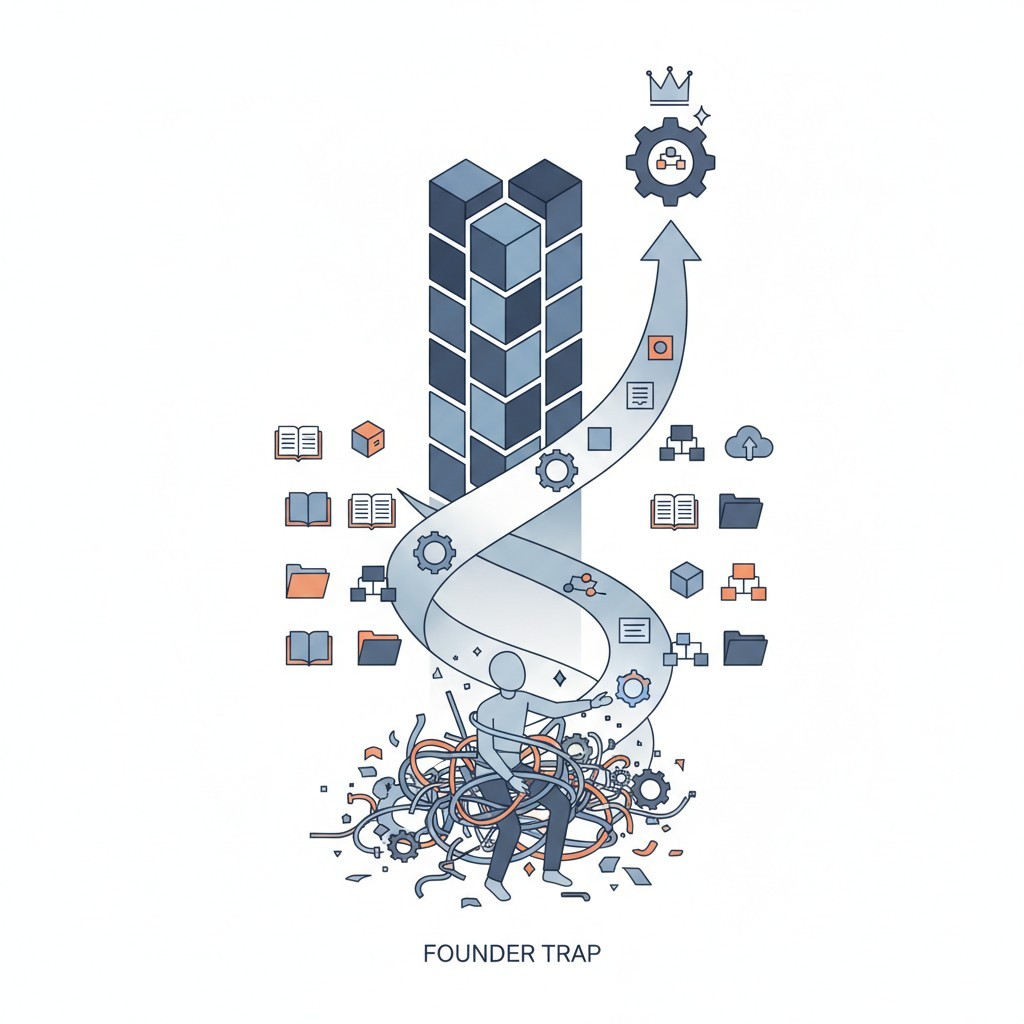
What is an SOP in Business? The Architecture to Escape the Founder Trap

I Built a 6 Million Dollar Company That Couldn't Run Without Me
How to Build a Business That Works (Hint: Systems!)

Employee Onboarding and Training: A Practical Guide for Small and Medium Businesses

How to Write Standard Operating Procedures for Manufacturing: A Field-Proven Blueprint

Essential Quality Control Practices for Operational Excellence

How Standardized Processes Drive Operational Efficiency and Growth