
Effective Operational Risk Management Strategies to Mitigate Risks in Growing Businesses
Listen to this article

Ryan Pease
FOLLOW

Most small business owners think operational risk management is something banks and Fortune 500 companies worry about. They picture compliance officers, governance committees, and elaborate risk dashboards. What they don't picture is the marketing agency that loses its top project manager and suddenly can't deliver client work consistently. Or the IT services firm where the founder is the only person who knows how to onboard a new client. Or the consulting business that had a perfect quarter, then watched revenue drop when one key employee left and took half the team's institutional knowledge with them.
That's operational risk. And for founder-led businesses with 10 to 50 employees, it's not a distant corporate concern. It's happening right now, quietly, in every undocumented workflow and every process that only one person knows how to run.
This guide breaks down practical operational risk management strategies specifically for small and mid-sized businesses. No enterprise jargon. No risk teams required. Just a clear, actionable framework for identifying what could go wrong in your operations and building the systems to prevent it.
What Is Operational Risk Management (and Why SMBs Can't Ignore It)?
Operational risk management (ORM) is the systematic process of identifying, assessing, and mitigating risks that arise from internal processes, people, systems, and external events. In plain terms, it's the discipline of asking: "What could go wrong in how we actually run this business?" and then doing something about it before it does.
The Basel Committee on Banking Supervision, which formalized much of the ORM language used today, defined operational risk as "the risk of loss resulting from inadequate or failed internal processes, people, and systems, or from external events." While that definition comes from the banking world, the underlying concept applies just as powerfully to a 20-person professional services firm or a specialty contractor with field crews.
ORM is distinct from enterprise risk management (ERM), which covers a broader universe including strategic, financial, and reputational risks. ORM focuses specifically on the operational layer: how work gets done, who does it, what systems support it, and what breaks when any of those elements fails. For SMBs without dedicated risk functions, this narrower focus is actually an advantage. It means you don't need a complex framework. You need clarity on your processes and the discipline to document and protect them.
Here's the part most small business owners miss: informal processes are not neutral. They are a form of hidden operational risk. When a workflow exists only in someone's head, every time that person is unavailable, the business is exposed. When a client onboarding process is done differently by each team member, quality variability is baked in. When the founder is the only person who can handle escalations, the business has a single point of failure at its center. These are not minor inefficiencies. They are operational risks with real financial consequences.
The Four Core Types of Operational Risk
Understanding the categories of operational risk helps business owners stop thinking about risk in vague terms and start seeing it in specific, solvable problems.
People Risk: Key-Person Dependency and Tribal Knowledge
People risk encompasses anything that can go wrong because of human factors: errors, turnover, skill gaps, misconduct, and the concentration of critical knowledge in too few people. For growing SMBs, the most dangerous form of people risk is key-person dependency, which is covered in depth later in this guide. But it also includes the risk of a new hire making costly errors because training is inconsistent, or a team member cutting corners because no one has clearly defined the standard.
Process Risk: Undocumented and Inconsistently Followed Workflows
Process risk is the most controllable category for growing businesses, and it's also the most common. It emerges when workflows are informal, inconsistent, or exist only in someone's memory. Every time a process is executed differently by different people, you're introducing variability. Variability in a service business means inconsistent client experiences, rework, missed steps, and eventually, churn. Process risk is the category where documented standard operating procedures have the highest leverage.
Systems Risk: Tool Failures and Integration Gaps
Systems risk covers the technology and tools your business depends on. This includes software outages, data loss, security breaches, and the gaps that appear when systems don't communicate with each other properly. For a 15-person agency or a managed services provider, systems risk might look like a CRM that doesn't sync with the project management tool, leading to missed follow-ups. Or a cloud storage system with no backup protocol, meaning one accidental deletion could wipe out critical files.
External Events Risk: Supply Chain, Regulatory, and Market Disruptions
External events risk is the category businesses have the least control over. It includes regulatory changes, supply chain disruptions, economic shifts, and events like natural disasters or pandemics. While you can't prevent these events, you can build operational resilience by ensuring your internal processes are documented and your team can adapt without depending on heroic individual effort.
The Five-Step Operational Risk Management Process
Effective operational risk management follows a repeatable cycle. Here's how each step applies to a small service business operating without a dedicated risk team.
Step 1: Identify
Start by mapping where risk lives in your operations. Walk through your core business processes: client intake, service delivery, billing, onboarding, and team handoffs. Ask: "What could go wrong here? What happens if the person who runs this is unavailable? What's undocumented?" Risk identification should be a collaborative exercise, not a solo founder assessment. The people doing the work often see the risks most clearly.
Step 2: Assess
Once risks are identified, assess each one based on two factors: likelihood (how often could this happen?) and impact (how bad would it be if it did?). A simple 3x3 or 5x5 risk matrix works well for small teams. High likelihood combined with high impact means the risk needs immediate attention. Low likelihood and low impact can be monitored without urgent action.
Step 3: Measure
Measurement means putting numbers to risk wherever possible. How many processes are currently undocumented? How many client-facing workflows depend on a single person? How often does rework occur in a given month? Measuring risk helps prioritize action and creates a baseline for tracking improvement over time.
Step 4: Mitigate
Mitigation is where strategy meets action. This step involves choosing and implementing the right risk control for each identified risk. The six core operational risk management strategies covered in the next section provide the toolkit for this step. For most SMBs, mitigation will center heavily on documentation, cross-training, and process standardization.
Step 5: Monitor
Risk management is not a one-time project. After controls are implemented, they need to be monitored for effectiveness. This doesn't require complex dashboards. A monthly review of key risk indicators (KRIs), a quarterly process audit, and a simple risk register updated regularly are enough for most small teams. The goal is to catch emerging risks before they become crises.
Six Operational Risk Management Strategies That Actually Work for Growing Businesses
When it comes to mitigating operational risks, businesses have several strategic options. The key is matching the right strategy to the right type of risk.
1. Risk Avoidance
Avoidance means eliminating the activity or condition that creates the risk. For example, a consulting firm might decide not to take on projects that require capabilities it doesn't have in-house, avoiding the risk of underdelivering. Avoidance is appropriate when the risk is high and the activity isn't core to the business.
2. Risk Reduction
Reduction means taking steps to lower either the likelihood or the impact of a risk. This is the most commonly applicable strategy for SMBs and includes documentation, training, quality checks, and process standardization. When a business documents its client onboarding process, it reduces the likelihood of steps being missed and the impact of a team member leaving.
3. Risk Transfer
Transfer shifts the financial consequence of a risk to a third party, typically through insurance or contracts. Errors and omissions insurance, for example, transfers some of the financial risk of a service delivery failure. Subcontractor agreements can transfer risk related to specialized work performed outside the business's core competency.
4. Risk Acceptance
Some risks are low enough in likelihood or impact that the cost of mitigation exceeds the cost of the risk itself. Acceptance means consciously deciding to live with the risk while keeping it visible. The key word is "consciously." Accepting a risk by default because no one has thought about it is not a strategy. Accepting it after evaluation is.
5. Risk Retention
Retention is a form of acceptance where the business self-funds the potential loss, often through reserves or contingency budgets. This is appropriate for predictable, manageable losses where insurance would be disproportionately expensive.
6. Risk Reduction Through SOPs (The SMB Power Move)
For founder-led service businesses, the single highest-leverage risk reduction strategy available is the systematic documentation of operating procedures. SOPs don't just improve efficiency. They are operational risk controls. A documented process reduces variability, enables cross-training, supports consistent quality, and makes the business less dependent on any single individual. This strategy is covered in depth in its own section below.
How Standard Operating Procedures Function as Your First Line of Operational Risk Defense
Here's a connection that almost no one in the risk management space makes explicitly: for a founder-led SMB, a well-built library of standard operating procedures is the most practical and highest-leverage operational risk management tool available.
Think about what an SOP actually does from a risk management perspective. It takes a process that exists in someone's head (a single point of failure) and converts it into a replicable, trainable, auditable system. It reduces the likelihood of errors by giving team members a clear standard to follow. It reduces the impact of turnover by ensuring that when someone leaves, the knowledge doesn't leave with them. It closes control gaps by making the expected steps explicit and verifiable.
In formal risk management language, an SOP is a preventive control. It acts before the loss occurs by reducing the probability that something goes wrong. Most SMBs rely heavily on detective controls (discovering problems after they happen) and corrective controls (fixing them after the fact). SOPs shift the balance toward prevention.
Consider a practical example. A marketing agency has a client reporting process that one senior account manager runs from memory. If that person is out sick, on vacation, or resigns, client reports either don't go out or go out late and incomplete. The risk: client dissatisfaction, potential contract termination, revenue loss. The control: a documented SOP for client reporting that any team member can follow. The risk doesn't disappear, but its likelihood and impact both drop significantly.
The SOP-as-risk-control framework works across all four types of operational risk. For people risk, SOPs enable cross-training and reduce key-person dependency. For process risk, they standardize execution and eliminate variability. For systems risk, they include documented protocols for tool failures and data management. For external events risk, they support faster adaptation by giving teams a clear baseline to deviate from intentionally rather than chaotically.
The Hidden Risk No One Talks About: Founder and Key-Person Dependency
If there is one operational risk that is uniquely dangerous for growing SMBs and almost universally underestimated, it is founder and key-person dependency.
In a business with 10 to 50 employees, it's common for critical operational knowledge to be concentrated in two or three people. The founder knows how to close a deal and onboard a client. The senior technician knows how to handle complex service issues. The office manager knows where everything is and how everything works. These individuals are not just valuable. They are, functionally, single points of failure in your operational system.
The risk materializes in several ways. The most obvious is voluntary turnover: a key employee leaves and takes their knowledge with them. But the risk also shows up in growth constraints (the founder can't scale because they're personally involved in too many processes), in quality inconsistency (work is only done right when the right person does it), and in acquisition or succession barriers (a business that can't run without its founder is worth significantly less to a buyer).
What makes this risk particularly insidious is that it often feels like a strength. "We have amazing people who really know their stuff" is a statement of pride in most businesses. And it should be. But institutional knowledge that lives only in people's heads is a liability, not just an asset. The moment any of those people become unavailable, the knowledge gap becomes a business crisis.
The solution is not to replace great people with robots or rigid processes. It's to extract and document the knowledge those people carry so that it lives in the business's systems, not just in individual minds. That's what a well-implemented SOP program does. It captures the expertise of your best people and makes it accessible, trainable, and scalable.
For founders specifically, the dependency risk often runs deepest. Many founders are involved in sales, delivery, escalation handling, key client relationships, and strategic decisions simultaneously. Reducing founder dependency is not just a risk management exercise. It's the prerequisite for scaling, for taking a vacation without the business grinding to a halt, and for eventually transitioning out of daily operations.
Building Your Operational Risk Management Framework
An ORM framework doesn't need to be complex. For a business with 10 to 50 employees, it needs to be clear, practical, and embedded in how the team actually works.
Roles and Responsibilities
Even without a dedicated risk manager, someone needs to own ORM. In most SMBs, this is the founder or a senior operations leader. The key is to distribute risk ownership across the team by assigning process owners. Each core business process should have a named owner who is responsible for keeping that process documented, trained, and functioning. This distributes accountability without requiring a separate risk function.
Risk and Control Self-Assessment (RCSA) for SMBs
The RCSA is a formal risk management tool that asks: "Where are our processes breaking down, and where are our controls missing?" For a small team, this doesn't need to be a formal exercise with consultants and elaborate templates. It can be a quarterly team conversation structured around three questions: What processes do we have that aren't documented? Where have we had errors or near-misses recently? What would break if our top two people were unavailable tomorrow?
The output of an RCSA is a risk register: a living document that lists identified risks, their assessed likelihood and impact, the controls in place, and the owner responsible for monitoring each risk. A simple spreadsheet works fine for most SMBs.
Connecting the Framework to Daily Operations
The most common reason ORM frameworks fail in small businesses is that they exist as separate documents that no one looks at. The framework needs to be connected to how the team actually operates. This means embedding risk controls (especially SOPs) into daily workflows, referencing them in team meetings, and using them as the basis for onboarding and training.
What Operational Risk Actually Costs Service Businesses (and How to Calculate Your Exposure)
Abstract discussions of risk don't motivate action. Numbers do. Here's how operational risk translates into real financial cost for service businesses, and how to estimate your own exposure.
The Cost of Rework
When work is done incorrectly because a process wasn't followed or wasn't documented, it has to be done again. In a service business, rework costs include the labor hours to redo the work, the cost of any materials or tools consumed, and the opportunity cost of those hours not being applied to billable work. For a business with a 40% gross margin, one hour of rework costs the business roughly 2.5 hours of revenue to recover. Track your rework incidents for 30 days and multiply by your average hourly cost. The number is usually surprising.
The Cost of Missed Handoffs
In a service business, handoffs between team members, departments, or stages of delivery are where things fall through the cracks. A missed handoff might mean a client doesn't receive a follow-up call, a deliverable is delayed, or a billing trigger is missed. Each missed handoff has a direct cost (the recovery time) and an indirect cost (client trust erosion). Businesses that track client churn often find that a significant portion traces back to a series of small missed handoffs rather than a single catastrophic failure.
The Cost of Turnover and Knowledge Loss
The commonly cited cost of replacing an employee is 50% to 200% of their annual salary, depending on role complexity. But for service businesses with undocumented processes, the actual cost is higher because it includes the knowledge that leaves with the employee. When a senior team member exits and their processes aren't documented, the business effectively loses both the person and the institutional knowledge. Recruiting and training a replacement doesn't recover that knowledge. It just starts the accumulation process over.
The Cost of Inconsistent Delivery
Variability in service delivery is a churn driver that's difficult to measure but easy to feel. When clients receive inconsistent experiences depending on who handles their account, satisfaction scores drop and renewal rates follow. For a business with $3 million in annual revenue and a 10% annual churn rate, a 2-percentage-point reduction in churn from more consistent delivery is worth $60,000 in retained revenue per year.
To calculate your rough operational risk exposure: add up your estimated monthly rework costs, the revenue impact of client churn attributable to delivery inconsistency, the cost of one key-person departure in the last 12 months, and the value of time the founder spends on tasks that could be delegated if processes were documented. For most SMBs in the $1M to $10M range, this number lands between $100,000 and $500,000 annually.
Common Operational Risk Management Challenges (and How to Overcome Them)
Over-Reliance on Experienced Employees
The longer an employee has been with a company, the more institutional knowledge they carry and the harder it becomes to imagine the business without them. This creates a psychological barrier to documentation: "Sarah's been here for eight years. She knows everything." The fix is to reframe documentation not as a lack of trust in Sarah, but as a way to protect the business from the risk of Sarah being unavailable, for any reason. Documentation honors the knowledge; it doesn't replace the person.
Processes That Live in the Founder's Head
Many founders built their businesses by being exceptionally good at something and doing it themselves. Extracting that knowledge is often the hardest part of building an operational system. The practical approach is to start with recording: have the founder walk through a process out loud while someone else documents it. Video recordings, voice memos, and screen captures are all legitimate first drafts. The goal is to get the knowledge out of one person's head and into a format the team can use.
Resistance to Documentation and Change
Team members sometimes resist documentation because they see it as bureaucracy, as a threat to their job security, or as extra work on top of an already full plate. Overcoming this resistance requires framing documentation as a benefit to the team (not just the business): clearer expectations, easier onboarding of colleagues, less time spent answering the same questions repeatedly, and a path to delegation that frees up senior staff for more interesting work.
A Phased Roadmap for Implementing ORM When You Have No Risk Team
Most ORM resources describe mature programs with dedicated risk officers, governance committees, and enterprise software. That's not where most SMBs start. Here's a phased roadmap designed for businesses starting from zero.
Phase 1: Awareness and Inventory (Weeks 1 to 4)
Start by building awareness of where risk lives in your business. Map your core processes: the 10 to 20 workflows that, if they broke down, would most directly impact clients or revenue. For each process, note whether it's documented, who owns it, and what would happen if that person were unavailable. This inventory doesn't need to be perfect. It needs to be honest.
Phase 2: Prioritization and Quick Wins (Weeks 5 to 8)
Using the inventory from Phase 1, identify the top five to seven highest-risk processes. These are the ones with high impact, low documentation, and single-person dependency. Start documenting these first. Don't try to document everything at once. Focus on the processes where a failure would cost the most or create the most disruption.
Phase 3: Documentation and Cross-Training (Months 3 to 6)
With the highest-risk processes documented, begin cross-training team members on those processes. A documented SOP is only a risk control if someone other than the original process owner can actually follow it. Test the SOPs by having a second team member execute the process using only the documentation, then refine based on what they find unclear or missing.
Phase 4: Framework and Cadence (Months 6 to 12)
Build the ongoing ORM cadence into business operations. This means a quarterly risk review, a living risk register, and a process for capturing new risks as the business evolves. By this phase, the business has moved from reactive to proactive risk management. The goal is to make ORM a habit, not a project.
Phase 5: Continuous Improvement (Ongoing)
ORM is not a destination. As the business grows, new risks emerge. New processes are created, new team members join, new systems are adopted. The framework built in Phase 4 provides the structure to absorb these changes without losing operational control.
Choosing the Right Risk Control: SOPs, Insurance, Redundancy, or Automation?
One of the most practical questions in operational risk management is not just "how do we reduce this risk?" but "which type of control is right for this specific risk?" Here's a decision framework for SMB owners.
When to Use SOPs
SOPs are the right control when the risk stems from process variability, knowledge concentration, or inconsistent execution. If the risk is "this process gets done differently by different people" or "only one person knows how to do this," an SOP is the primary control. SOPs work best for repeatable, human-executed processes where the steps can be defined and the outcome can be verified.
When to Use Insurance
Insurance is the right control when the risk involves a potential financial loss that is too large to absorb internally and too unpredictable to prevent through process controls. Errors and omissions coverage, general liability, cyber liability, and key-person life insurance are all examples of risk transfer mechanisms appropriate for SMBs. Insurance doesn't prevent the event; it limits the financial damage.
When to Use Redundancy
Redundancy means building backup capacity into critical systems or roles. This is appropriate when a single point of failure exists and the cost of failure is high. Examples include cross-training a second person on every critical process, maintaining backup software tools for key functions, and keeping vendor alternatives identified for critical suppliers. Redundancy is more expensive than documentation but necessary when the stakes of failure are very high.
When to Use Automation
Automation is the right control when a process is highly repetitive, rule-based, and prone to human error. Automated reminders, triggered workflows, and integrated systems reduce the likelihood of steps being missed because they remove the human memory requirement. Automation works best after a process is documented (so you know exactly what you're automating) and should not be used to paper over a poorly defined process.
In practice, most operational risks require a combination of controls. A client onboarding process might be documented in an SOP (process control), cross-trained across two team members (redundancy), supported by automated task triggers in the project management system (automation), and covered by errors and omissions insurance (transfer). The art is in knowing which controls to layer and in what order to implement them.
Benefits of a Strong Operational Risk Management Program
For SMBs that invest in building ORM capabilities, the payoff shows up in several measurable ways.
Reduced Cost of Errors, Rework, and Missed Handoffs
When processes are documented and followed consistently, the frequency of errors drops. Less rework means more billable hours, lower labor costs, and higher margins. For a service business operating at a 35% to 45% gross margin, even a 5% reduction in rework can represent a meaningful improvement in profitability.
Faster Onboarding and Team Scalability
A business with documented processes can onboard new team members in half the time of a business that relies on shadowing and tribal knowledge transfer. Faster onboarding means faster productivity and lower cost per hire. More importantly, it means the business can scale without the founder becoming the bottleneck for every new hire's training.
Competitive Advantage Through Consistent Delivery
In service industries, consistency is a differentiator. Clients who receive the same quality of service regardless of which team member handles their account are more likely to renew, refer, and expand their relationship with the business. Consistent delivery is not just a risk management outcome. It's a revenue growth strategy.
Reduced Founder Involvement in Daily Operations
For founders, the most personal benefit of a strong ORM program is freedom. When the business has documented systems and a team that can run them, the founder can step back from daily execution and focus on growth, strategy, or the aspects of the business they find most fulfilling. This is not just a lifestyle benefit. It's the structural prerequisite for scaling past the founder's personal bandwidth.
Operational Risk Management Checklist for Small and Mid-Sized Businesses
Use this checklist as a starting point for building or auditing your ORM program. It's sized for teams of 10 to 50 people and doesn't require a dedicated risk function to implement.
Process Inventory and Documentation
Have you identified your 10 to 20 core business processes?
Does each process have a documented SOP that a new team member could follow?
Are SOPs stored in a central, accessible location (not in someone's personal files)?
Are SOPs reviewed and updated at least annually or when the process changes?
Is there a named process owner for each core workflow?
Key-Person Dependency
Have you identified which processes depend on a single person to execute?
Is there at least one cross-trained backup for each critical process?
Have you documented the processes that currently live only in the founder's head?
Could your business operate for two weeks without its top two people? If not, which processes would break?
Risk Identification and Assessment
Do you have a risk register that lists known operational risks?
Has each risk been assessed for likelihood and impact?
Are high-priority risks assigned to an owner with a mitigation plan?
Do you review the risk register at least quarterly?
Systems and Tools
Are your critical business tools backed up regularly with tested recovery procedures?
Do you have documented procedures for tool failures or outages?
Are access credentials and system documentation stored securely and accessible to more than one person?
Monitoring and Improvement
Do you track key risk indicators such as error rates, rework frequency, and client complaints?
Do you conduct a regular process audit (at least annually)?
Is there a mechanism for team members to flag process breakdowns or near-misses?
Do new hires receive training based on documented SOPs rather than informal shadowing?
Operational Risk Management Tools and Resources for Small Teams
You don't need enterprise GRC (governance, risk, and compliance) software to manage operational risk effectively in a small business. The tools that matter most are the ones your team will actually use.
The Risk Register
A risk register is the foundational ORM document. It's a living record of identified risks, their assessed likelihood and impact, the controls in place, and the owner responsible. For most SMBs, a well-structured spreadsheet or a simple table in a project management tool is sufficient. The key is that it's updated regularly and reviewed in team meetings.
SOP Platforms
The most important tool for SMB operational risk management is a platform for creating, storing, and accessing standard operating procedures. The right platform makes SOPs easy to write, easy to find, and easy to update. It should support version control (so you know which version of a process is current), access control (so the right people can see and edit each document), and ideally some form of training or acknowledgment tracking.
Process Mapping Tools
Visual process maps help teams see how work flows across roles and departments, making handoff risks visible. Simple tools like Lucidchart, Miro, or even a well-structured flowchart in a presentation tool can surface process gaps that written descriptions miss.
Lightweight GRC Alternatives
For SMBs that want more structure than a spreadsheet but aren't ready for enterprise GRC software, there are mid-market options that combine risk registers, policy management, and audit tracking in a more accessible format. The choice of tool matters less than the discipline of using it consistently.
Frequently Asked Questions About Operational Risk Management
What are the 5 steps of operational risk management?
The five steps are: identify (find where risks exist in your processes and systems), assess (evaluate likelihood and impact), measure (quantify the risk using data), mitigate (implement controls to reduce the risk), and monitor (track control effectiveness and watch for new risks). This cycle repeats continuously as the business evolves.
What are the four main types of operational risk?
The four main types are people risk (human error, turnover, key-person dependency), process risk (undocumented or inconsistently followed workflows), systems risk (technology failures and integration gaps), and external events risk (regulatory changes, supply chain disruptions, market shifts).
What are the four pillars of operational risk management?
The four pillars are governance (who owns risk decisions and accountability), risk identification and assessment (finding and evaluating risks), risk controls (the mechanisms that reduce or manage risk), and monitoring and reporting (tracking whether controls are working). For SMBs, these pillars don't require formal committees. They require clear ownership and consistent habits.
What are 5 risk management strategies?
The five core strategies are risk avoidance (eliminating the risky activity), risk reduction (lowering likelihood or impact through controls), risk transfer (shifting financial exposure to a third party through insurance or contracts), risk acceptance (consciously deciding to live with a low-priority risk), and risk retention (self-funding the potential loss). For SMBs, risk reduction through process documentation is typically the highest-leverage starting point.
What are the best tools for operational risk management in small businesses?
The most valuable tools for SMBs are a risk register (to track identified risks and controls), an SOP platform (to create and store documented procedures), and a process mapping tool (to visualize workflows and handoffs). Enterprise GRC platforms are generally overbuilt for businesses under $10M in revenue. Lightweight, usable tools consistently applied are more effective than sophisticated tools that the team doesn't engage with.
What are the 7 stages of risk management?
Expanded risk management frameworks sometimes describe seven stages: establish context, identify risks, analyze risks, evaluate risks, treat risks, communicate and consult, and monitor and review. For SMBs, the five-step model (identify, assess, measure, mitigate, monitor) covers the same ground in a more actionable format. The communication and context steps are embedded in how the framework is implemented rather than treated as separate stages.
What is the difference between ORM and ERM?
Operational risk management (ORM) focuses specifically on risks arising from internal processes, people, systems, and external events. Enterprise risk management (ERM) is a broader framework that encompasses strategic, financial, reputational, and operational risks across the entire organization. For most SMBs, ORM is the more relevant and immediately actionable framework. ERM becomes relevant as businesses grow and need to manage risk across multiple business units or stakeholder groups.
Taking the First Step Toward Operational Resilience
Operational risk management doesn't have to be complicated to be effective. For a founder-led business with 10 to 50 employees, the most impactful thing you can do right now is identify the five processes most critical to your revenue and client experience, and make sure each one is documented, owned, and cross-trained.
That's not a risk management project. That's the beginning of a business that can run without you being in the room for every decision, that can onboard new team members without losing months of productivity, and that can grow without the founder becoming the bottleneck.
The businesses that mitigate operational risks most effectively aren't the ones with the most sophisticated frameworks. They're the ones that have made documentation and process ownership a cultural habit. They've extracted the knowledge from their best people and built it into systems the whole team can use. They've replaced single points of failure with resilient, repeatable processes.
That's what operational excellence looks like for a growing SMB. And it starts with a decision to take your processes as seriously as you take your revenue.
Check out other interesting articles here 👇

Why Free Acceptable Use Policy Templates Destroy Enterprise Value
The Hidden Tax: How Operational Chaos is Bleeding Your Business Dry

The Architecture of Operational Freedom: Engineering a Business That Runs Without You

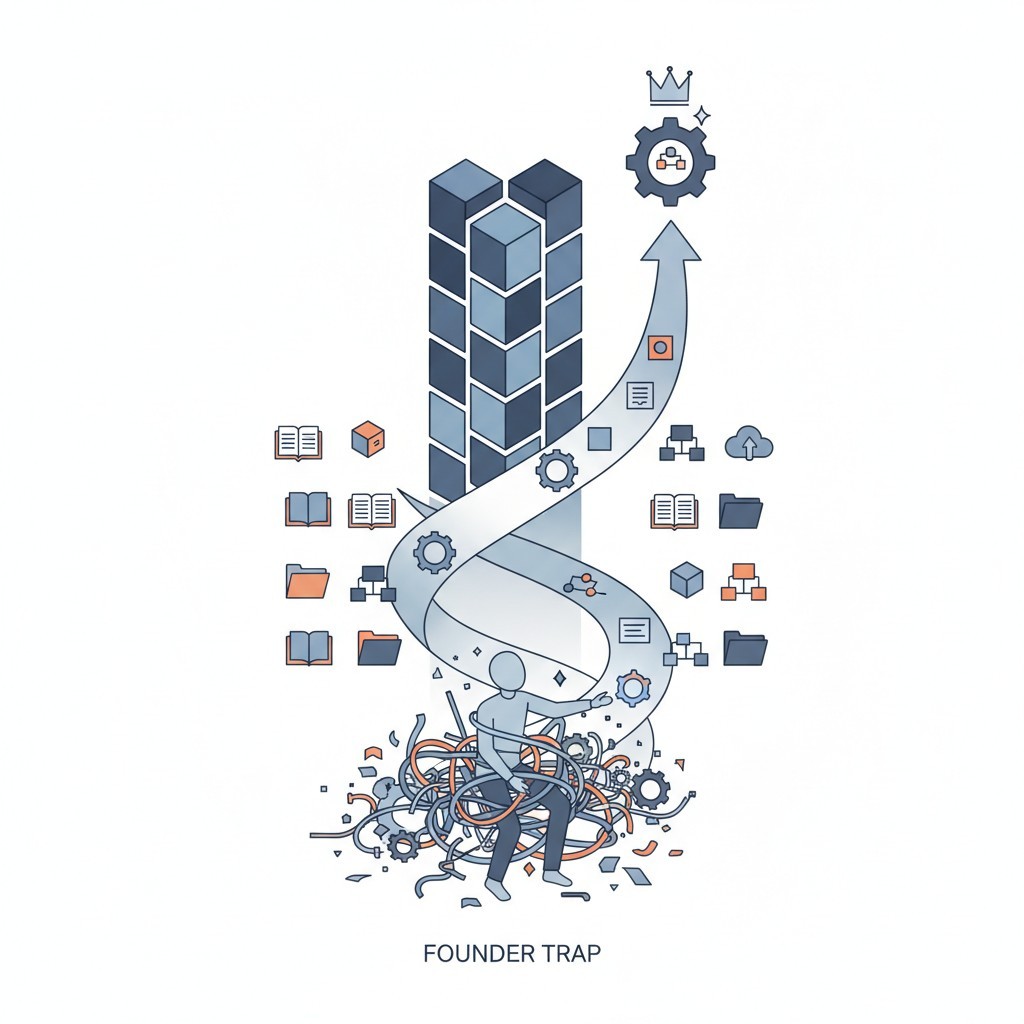
What is an SOP in Business? The Architecture to Escape the Founder Trap
I Built a 6 Million Dollar Company That Couldn't Run Without Me
How to Build a Business That Works (Hint: Systems!)
Employee Onboarding and Training: A Practical Guide for Small and Medium Businesses

How to Write Standard Operating Procedures for Manufacturing: A Field-Proven Blueprint

Essential Quality Control Practices for Operational Excellence

How Standardized Processes Drive Operational Efficiency and Growth