
Step-by-Step Guide to Implementing Quality Control in Your Business
Listen to this article

Ryan Pease
FOLLOW

When a client receives inconsistent work from a service business, they rarely complain twice. They simply leave, and they take their referrals with them. For founder-led businesses with 10 to 50 employees, inconsistent quality is rarely a people problem. It is almost always a systems problem: there are no documented standards, no assigned checkpoints, and the founder is the only person catching mistakes before they reach the client.
This guide walks through exactly how to implement quality control in a service or operational business, from defining what "good" looks like to embedding checkpoints inside standard operating procedures (SOPs) that your team can follow without you hovering over every deliverable.
What Is Quality Control (and Why It Matters for Service Businesses)?
Quality control (QC) is the process of reviewing outputs against a defined standard before they reach the client or the next stage of a workflow. In plain terms, it is the mechanism that catches errors, inconsistencies, and missed expectations before they cause damage.
Most articles about quality control are written for manufacturers. They reference production lines, defect rates, and statistical sampling. That framing does not translate cleanly to a marketing agency, a managed service provider, an accounting firm, or a specialty contractor. In service businesses, the "product" is often intangible: a report, a campaign, a project deliverable, a client interaction, or a completed job. Because the output is harder to inspect than a physical widget, quality standards must be more deliberately designed and documented.
Quality Control vs. Quality Assurance: What Is the Difference?
These two terms are frequently used interchangeably, but they describe different activities. Quality control is reactive: it checks whether a specific output meets the standard. Quality assurance (QA) is proactive: it improves the process so that outputs are more likely to meet the standard in the first place.
A simple way to remember it: QC catches the problem after work is done. QA prevents the problem from happening in the first place. Both matter, and both should be reflected in a well-built set of SOPs.
What Poor Quality Control Actually Costs a Small Business
Before getting into the mechanics of how to implement quality control, it is worth being concrete about what poor quality actually costs, because most business owners underestimate it significantly.
Rework costs: When a deliverable misses the mark, someone has to redo it. In a service business, that is unbilled labor. If a team of five people each spend two hours per week fixing avoidable errors, that is 10 hours of wasted capacity every week, roughly 500 hours per year.
Client churn: Research consistently shows that acquiring a new client costs five to seven times more than retaining an existing one. A single quality failure, especially a repeated one, accelerates churn in ways that are hard to reverse.
Reputation damage: In service industries, referrals drive a significant portion of new business. A client who experiences inconsistent quality does not just leave quietly; they share the experience with their network.
Founder time drain: When there is no QC system, the founder becomes the system. Reviewing every deliverable, fielding every client complaint, and correcting every missed handoff is not a scalable role. It is a trap.
Team morale: Employees who constantly receive unclear feedback about what "good" looks like become disengaged. Ambiguous standards create anxiety, not accountability.
The cost of poor quality is not abstract. It shows up in the P&L, in client retention rates, and in the founder's calendar.
How Quality Control Works Differently in Service Businesses
Manufacturing quality control has a clear inspection point: the product comes off the line and gets checked against a specification. Service delivery is messier. The "product" is often co-created with the client, delivered over time, and varies by team member, client context, and project complexity.
This means several things for how quality control must be designed in a service business:
Standards must be explicit, not assumed. In a factory, a part either fits the tolerance or it does not. In a service business, "good client communication" or "accurate financial reporting" needs to be broken down into specific, observable behaviors and outputs before it can be checked.
Checkpoints happen throughout delivery, not just at the end. Because service work unfolds over time, quality checks need to be built into the workflow at multiple stages, not just before the final deliverable goes out.
The client is often part of the process. Quality failures in service businesses sometimes happen at the interface between the business and the client. Intake processes, scoping conversations, and expectation-setting are all quality-critical moments that rarely appear in manufacturing QC frameworks.
Documentation is the infrastructure. Without documented standards and procedures, quality control in a service business is entirely person-dependent. The moment a key employee leaves or a founder steps back, quality drops.
The Core Steps of a Quality Control Process
Here is a practical sequence for establishing quality control in a service or operational business. These quality control procedures steps apply whether the business is a 12-person marketing agency or a 40-person specialty contractor.
Step 1: Set Quality Standards Tied to Client Expectations
Start by defining what "done well" looks like for each major deliverable or service category. The standard needs to be specific enough that two different team members, working independently, would produce outputs that both meet it. Vague standards like "professional quality" or "client-ready" are not standards; they are opinions.
For each core deliverable, document: what the output must include, what it must not include, how it should be formatted or structured, what the client expects to experience, and what the acceptance criteria are.
Step 2: Map the Workflow and Identify Failure Points
Walk through each repeatable process and identify where quality most commonly breaks down. Common failure points in service businesses include: handoffs between team members, transitions between project phases, client communication touchpoints, and final review before delivery. These are the moments where checkpoints need to live.
Step 3: Build Checkpoints Into the Workflow
For each failure point identified, define a specific quality checkpoint: what gets checked, who checks it, and what the pass/fail criteria are. Checkpoints should be embedded into the workflow itself, not added as an afterthought.
Step 4: Assign Ownership at the Role Level
Every quality check needs an owner. The owner should be defined by role, not by name, so accountability transfers when team members change. The founder should not be the default owner of every check.
Step 5: Measure, Review, and Close the Loop
Track quality outcomes over time: rework rates, client feedback, error frequency, and audit results. Use that data to identify systemic gaps and update the process. Quality control without a feedback loop is just inspection; with a feedback loop, it becomes continuous improvement.
How to Define Quality Standards for Your Business
Translating client expectations into measurable criteria is where most businesses struggle. The temptation is to write standards that sound good but cannot actually be checked. Here is a practical approach.
Start with the client outcome: what does the client need to experience or receive in order to consider the engagement a success? Work backward from that to identify the specific outputs and behaviors that produce it. Then ask: how would a new team member know whether this output meets the standard, without asking the founder?
If the answer is "they would not know without asking," the standard is not documented well enough. The goal is to make quality criteria self-explanatory to any competent team member.
Document these standards inside the relevant SOP, not in a separate quality manual that no one reads. Standards that live close to the work get used. Standards that live in a binder on a shelf do not.
How to Embed Quality Checkpoints Into Your Standard Operating Procedures
This is where SOP design and quality control intersect, and it is a gap that most QC frameworks completely miss. Most approaches treat quality control as a separate system layered on top of existing processes. A more effective approach is to embed quality checkpoints directly inside the SOP for each process.
Here is what that looks like in practice. Within each SOP, at every major stage or handoff, include a checkpoint step that specifies:
What must be verified before moving to the next step
Who is responsible for verifying it (by role)
What tool or checklist is used to verify it
What happens if the check fails (escalation path)
When quality checkpoints are embedded inside the SOP rather than sitting in a separate document, they become part of the workflow. Team members do not have to remember to check quality; the process itself prompts them to do it.
For example, in an onboarding SOP for a consulting firm, a checkpoint might read: "Before the kickoff call, the project lead reviews the completed intake form against the scope checklist and confirms all required fields are complete. If any field is missing, the project lead contacts the client before the call proceeds." That is a quality checkpoint embedded directly into the workflow, with a clear owner and a clear escalation path.
How to Stop Being the Only Quality Check in Your Business
This is the most common quality control failure pattern in founder-led businesses: the founder is the only person who knows what "good" looks like, so every significant deliverable passes through them before it goes to the client. This creates a bottleneck that limits growth, burns the founder out, and teaches the team to wait for approval rather than exercise judgment.
Breaking this pattern requires three things:
1. Document the Standard So Others Can Apply It
If the only way to know whether something meets the standard is to ask the founder, the standard is not documented. The first step is to make the founder's quality judgment explicit and transferable by writing it down in enough detail that a competent team member can apply it independently.
2. Assign QC Ownership to Roles, Not the Founder
For each quality checkpoint in each process, assign ownership to a specific role: account manager, project lead, senior technician, or team lead. The founder may retain oversight of high-stakes outputs initially, but the goal is to progressively transfer ownership as the team demonstrates competence with the documented standard.
3. Build Escalation Paths for Failed Checks
The reason founders often stay in the quality loop is that there is no clear protocol for what happens when something fails a check. Build that protocol into the SOP: if a deliverable fails the peer review checkpoint, it goes to the team lead for a second review before escalating to the founder. Most issues should be resolved before they reach the founder's desk.
Common Quality Control Methods and Techniques
There are several practical QC methods that work well for service and operational businesses without requiring a dedicated quality team or enterprise software.
Checklist-Based Review
A checklist is the most accessible and most underused quality control tool in small businesses. A well-designed checklist converts the founder's implicit quality judgment into an explicit, transferable standard. Every major deliverable should have an associated checklist that the responsible team member completes before the output moves forward.
Peer Review
Having a second team member review work before it goes to the client catches errors that the original author misses and distributes quality ownership across the team. Peer review works best when the reviewer has a checklist or rubric to work from, rather than relying on general impressions.
Supervisor or Lead Sign-Off
For high-stakes deliverables, a team lead or senior role reviews the output against documented criteria before it is released. This is different from founder review because the criteria are explicit and the reviewer is a role, not a specific person.
Periodic Audits
A scheduled audit compares actual outputs against documented standards across a sample of recent work. Audits are particularly useful for identifying systemic gaps, where the same type of error appears repeatedly across different team members or projects.
Error Logs and Rework Tracking
Tracking errors and rework events over time reveals patterns. If the same type of mistake keeps appearing, the root cause is almost always a process gap, not a people problem.
Who Should Own Quality Control in a Small or Growing Business?
In a business with 10 to 50 employees, a dedicated quality manager is rarely practical. Quality ownership needs to be distributed across existing roles in a structured way.
A practical model for establishing quality control at this scale:
Individual contributors own self-review using checklists before passing work to the next stage.
Team leads or project managers own checkpoint reviews at major handoff points.
Senior leaders or the founder own periodic audits and SOP update cycles, not day-to-day inspection.
This structure distributes quality accountability without creating a dedicated QC role. It also creates a natural escalation path: most issues are caught at the individual or team lead level, and only systemic or high-severity issues escalate to senior leadership.
A Simple Quality Control Checklist Template to Get Started
Use this template as a starting point for any major deliverable or service output in a service business. Adapt the criteria to the specific context.
Quality Control Checklist: [Deliverable or Process Name]
Reviewer role: [e.g., Project Lead, Account Manager]
Review stage: [e.g., Pre-delivery, Post-draft, Pre-client handoff]
Content and Completeness
All required sections or components are present
All client-specific requirements from the scope document are addressed
No placeholder text, incomplete fields, or missing data
Accuracy and Standards
Output meets the defined quality criteria for this deliverable type
Figures, data, or calculations have been verified against the source
Formatting matches the documented standard or client template
Client Readiness
The output is addressed to the correct client and contact
Language is appropriate for the client's level of familiarity with the subject
Next steps or required client actions are clearly stated
Handoff and Escalation
If any item above is not met: [document the escalation step, e.g., "Return to owner with specific notes. Do not advance to delivery."]
Reviewer signature or confirmation: [role, date]
This template should be embedded directly into the relevant SOP, not stored in a separate document. The goal is for the checklist to appear at the exact point in the workflow where the review needs to happen.
How to Improve Quality Control Over Time
Establishing quality control is not a one-time event. The system needs a regular update cycle to stay relevant as the business evolves.
Run a quarterly audit against documented standards, reviewing a sample of recent outputs. Look for patterns in what passes and what fails. Use error logs and rework data to identify the highest-frequency failure points. When a pattern emerges, trace it back to the process: is the standard unclear? Is the checkpoint missing? Is ownership ambiguous?
Update the relevant SOP to address the root cause, not just the symptom. Then communicate the change to the team and confirm that the updated process is being followed. This is the continuous improvement loop: audit, identify, fix, document, and repeat.
How to Scale Your Quality Control System as Your Team Grows
Quality control in a 10-person business looks different from quality control in a 40-person business. The mistake many founders make is trying to scale an informal QC system, one that lives in their head or in a few key employees' habits, rather than building a documented system that can grow with the team.
At 10 to 15 employees, a checklist-based system with peer review and occasional founder oversight is often sufficient. As the team grows past 20, the volume of work makes informal oversight impractical. This is the stage where role-level QC ownership, structured audit cycles, and documented escalation paths become essential.
At 40 to 50 employees, the business likely needs a designated quality lead within each functional area, a regular cross-functional audit process, and a formal SOP review cycle tied to business performance data. The infrastructure for this should be built before it is urgently needed, not after quality failures start accumulating.
The principle is simple: the QC system should be one step ahead of the team's current size. Build the structure for the business you are growing into, not the business you have today.
Frequently Asked Questions About Quality Control
What are the 5 steps of quality control?
The five core steps are: (1) define quality standards for each deliverable or process, (2) map the workflow and identify failure points, (3) build checkpoints into the workflow at each failure point, (4) assign ownership for each checkpoint at the role level, and (5) measure outcomes and use the data to update the process. These steps apply to both service and operational businesses.
What is the difference between quality control and quality assurance?
Quality control is reactive: it checks whether a specific output meets the defined standard. Quality assurance is proactive: it improves the process so that outputs are more consistently produced to the right standard. QC catches problems after work is done; QA prevents problems from occurring in the first place. Both are necessary, and both should be reflected in a business's SOPs.
How do small businesses implement quality control without a dedicated QC team?
By distributing quality ownership across existing roles using documented standards, checklists, and embedded checkpoints in SOPs. Individual contributors self-review using checklists. Team leads review at handoff points. Senior leaders run periodic audits. This structure creates accountability without requiring a dedicated quality function.
What are the 7 basic tools of quality control?
The classic seven tools, originally developed for manufacturing, are: cause-and-effect diagrams, check sheets, control charts, histograms, Pareto charts, scatter diagrams, and stratification. For service businesses, the most practical of these are check sheets (checklists), cause-and-effect analysis (root cause identification), and Pareto analysis (identifying which failure types account for the most rework or errors).
What are the four types of quality control?
The four commonly referenced types are: process control (monitoring the process as it runs), acceptance sampling (checking a sample of outputs), continuous improvement (using data to systematically improve processes over time), and product or deliverable inspection (reviewing outputs against a standard before release). Service businesses primarily use process control, deliverable inspection, and continuous improvement.
How do you document quality control procedures?
Quality control procedures should be documented inside the relevant SOP, not in a separate quality manual. For each process, document: the quality standard for each output, the checkpoint steps where review occurs, the role responsible for each review, the checklist or criteria used, and the escalation path if a check fails. Embedding QC documentation inside the SOP ensures it is used at the point of work rather than filed away and forgotten.
Putting It All Together: Establishing Quality Control That Lasts
Implementing quality control in a founder-led service business is not about adding more oversight. It is about building a system that makes good work the default, without requiring the founder to be in every loop.
The path is straightforward: define what "good" looks like in specific, measurable terms. Embed checkpoints into the workflows where quality most often breaks down. Assign ownership to roles, not to the founder. Equip the team with checklists and documented criteria. Run regular audits and use the results to improve the process over time.
When quality control lives inside the SOPs that govern how the business operates, it becomes self-sustaining. New team members learn the standard from the process itself. Quality outcomes become predictable. The founder can step back from daily inspection and focus on growth.
That is the real value of a well-implemented quality control system: not just fewer errors, but a business that can deliver consistently at scale, without the founder being the last line of defense on every piece of work that goes out the door.
Check out other interesting articles here 👇

Why Free Acceptable Use Policy Templates Destroy Enterprise Value
The Hidden Tax: How Operational Chaos is Bleeding Your Business Dry

The Architecture of Operational Freedom: Engineering a Business That Runs Without You

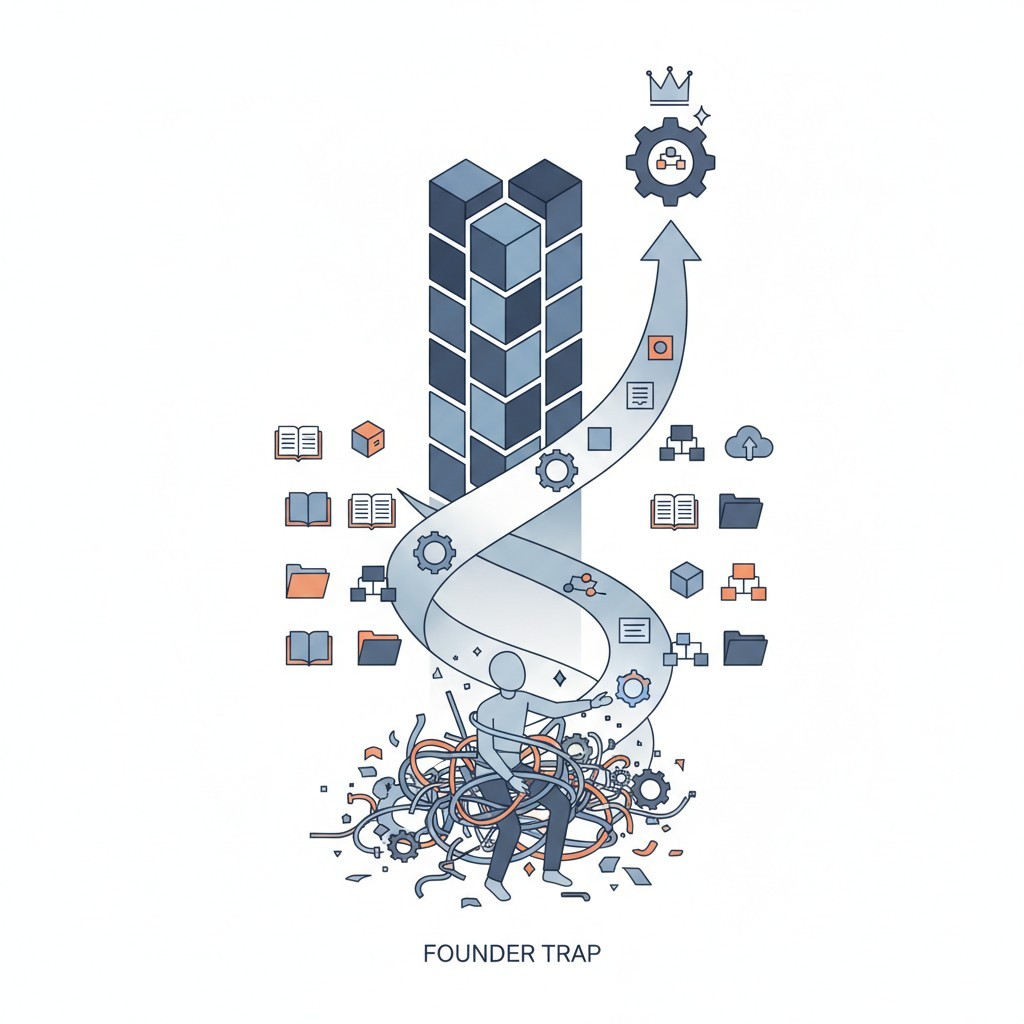
What is an SOP in Business? The Architecture to Escape the Founder Trap

I Built a 6 Million Dollar Company That Couldn't Run Without Me

How to Build a Business That Works (Hint: Systems!)

Employee Onboarding and Training: A Practical Guide for Small and Medium Businesses

How to Write Standard Operating Procedures for Manufacturing: A Field-Proven Blueprint

Essential Quality Control Practices for Operational Excellence

How Standardized Processes Drive Operational Efficiency and Growth