
Effective Employee Retention Strategies to Reduce Turnover in Small and Mid-Sized Businesses
Listen to this article

Ryan Pease
FOLLOW

Losing a good employee is expensive. Replacing them costs anywhere from 50% to 200% of their annual salary when you factor in recruiting, onboarding, lost productivity, and the institutional knowledge that walks out the door with them. For small and mid-sized businesses operating on tighter margins and leaner teams, that kind of hit can set a company back months.
Yet most advice on employee retention strategies reads like it was written for a Fortune 500 HR department, not a founder-led business with 20 employees and no dedicated people operations team. The reality for SMBs is different. The causes of turnover are different. And the solutions need to match.
This guide breaks down what actually drives people out of small businesses, what keeps them, and why operational clarity, specifically in the form of documented systems and standard operating procedures, is one of the most overlooked retention tools available to growing companies.
Why Employee Retention Is a Critical Problem for Small and Mid-Sized Businesses
In a large enterprise, one resignation creates a ripple. In a 15-person business, it creates a wave. Small teams absorb turnover differently. When a key employee leaves, their work does not disappear. It redistributes across people who are already stretched, often without a clear handoff plan.
The cost of turnover in SMBs is disproportionately high because smaller businesses rely more heavily on individual contributors. There is less redundancy, less documentation, and often no formalized process for capturing what a departing employee actually knew. That institutional knowledge is simply gone.
Key-person dependency accelerates this problem. When one or two people, including the founder, hold the answers to how the business actually runs, every departure destabilizes operations. Employees notice this. They feel the chaos, absorb the stress, and begin wondering whether staying is worth it.
Informal processes also push good people out. When employees have to guess at expectations, improvise workflows, or constantly interrupt colleagues for guidance, frustration builds. High performers especially, the ones with options, tend to leave environments where ambiguity is the norm.
Common Reasons Employees Leave Small Businesses
Before implementing any retention strategy, it helps to understand what is actually driving people out. In SMBs, the most common departure triggers include:
Role ambiguity: Employees do not have a clear picture of what they are responsible for, what success looks like, or how their work connects to the bigger picture.
No documented processes: Everything lives in someone's head. New hires flounder. Experienced employees burn out fielding the same questions repeatedly.
Limited growth paths: There is no visible route to advancement, no investment in development, and no acknowledgment of progress.
Founder bottlenecks: Decisions cannot move without the owner's input, which slows everything down and signals to capable employees that they will never have real autonomy.
Inconsistent communication: Employees feel left in the dark about company direction, changes, or their own performance.
Notice that compensation is not at the top of this list. While competitive pay matters, research consistently shows that people leave managers and environments before they leave paychecks.
How Undocumented Processes Drive Good Employees Out the Door
This is the connection almost no one talks about, but it is one of the most significant retention risks in founder-led businesses.
When a business has no documented processes, every employee is operating on informal knowledge. New hires have no reliable way to get up to speed. Experienced employees become bottlenecks because they are the only ones who know how things work. Mistakes happen repeatedly because there is no standard to reference. And the whole system depends on people never leaving, which of course they eventually do.
For high-performing employees, this environment is exhausting. They did not sign up to be the institutional memory for the whole company. They want to do their job well, grow, and contribute. When undocumented chaos makes that impossible, they start looking elsewhere.
Documented processes, specifically well-crafted SOPs, solve this at the root. They give employees a clear reference point for how work gets done. They reduce the cognitive load of figuring everything out from scratch. They create consistency that makes quality achievable without heroic effort. And they signal to employees that this is a real, stable, professionally run business, not a place where everything depends on who happens to be available to answer questions.
Reducing employee turnover starts with reducing the operational frustration that makes talented people leave in the first place.
Why Founder Dependency Makes It Harder to Keep Your Best People
In many SMBs, the founder is the system. They know the clients, hold the vendor relationships, make the calls, and carry the institutional knowledge that keeps everything running. This is understandable in the early stages. It becomes a serious problem as the business grows.
Founder dependency creates a retention risk that most business owners do not see until it is too late. Here is how it plays out:
A capable employee joins the company, excited about the opportunity. They quickly realize that nothing moves without the founder's approval. Decisions are delayed. Priorities shift without explanation. Their authority is unclear. They cannot grow into a leadership role because the founder is still in the way. After six to twelve months of this, they leave, often for a smaller title at a more organized company, because at least there they can own something.
Removing founder dependency is not just an efficiency strategy. It is a retention strategy. When employees have clearly defined roles, documented processes they can execute independently, and real authority within their domain, they feel trusted and capable. That feeling is a powerful reason to stay.
Installing a documented operating system, where the way the business runs is captured in writing and not just in the founder's head, is one of the most effective steps an SMB owner can take to keep their best people.
Retention Strategies Tailored to Businesses with 10 to 50 Employees
Most retention advice is written for companies with HR departments and large budgets. Businesses in the 10 to 50 employee range face a very specific set of challenges that generic advice does not address.
At this size, the company is large enough to have real coordination problems but small enough that everything still feels personal. Culture is fragile and highly influenced by a handful of individuals. Processes are often informal. Growth is exposing gaps that were invisible when the team was smaller.
Here is what works at this stage:
Formalize what is already working. Document the processes your best employees already follow intuitively. This captures institutional knowledge before it walks out the door and creates a standard others can learn from.
Create visible career paths. Even in a flat organization, employees need to see a future. Define what growth looks like, whether that is expanded responsibility, a title change, or a pay increase tied to specific milestones.
Invest in structured onboarding. At this size, a bad onboarding experience is felt across the whole team. A documented first-90-days process reduces early attrition and gets new hires contributing faster.
Build communication rhythms. Weekly team check-ins, one-on-ones, and regular company updates are not overhead at this size. They are glue. Without them, employees feel disconnected and uncertain.
Recognize contributions publicly. In a small team, recognition is visible. When a leader acknowledges someone's work in front of the group, it matters more than any formal awards program.
Use SOPs to Cut New-Hire Dropout Rates in the First 90 Days
The first 90 days of employment are the highest-risk period for turnover. New hires are evaluating whether they made the right choice. They are assessing whether the company is organized, whether their manager is helpful, and whether they can actually succeed in this role.
Businesses without documented processes make this evaluation easy, and not in a good way. New employees who have to piece together their role from scattered conversations, informal tips, and trial and error reach a simple conclusion: this place is not organized enough to support my success.
SOPs change this dynamic entirely. When a new hire has access to documented processes for their role, they can get up to speed faster, make fewer mistakes, and feel competent sooner. Time-to-competency, the point at which a new employee can perform their role independently, drops significantly when SOPs are in place.
A structured onboarding process built on SOPs should include:
A day-one orientation covering company values, team structure, and communication tools
Role-specific SOPs the employee can reference independently
Clear 30, 60, and 90-day milestones with defined expectations
A designated point of contact for questions (a buddy or mentor)
Scheduled check-ins to catch confusion before it becomes disengagement
When new employees feel set up to succeed, they stay. It is that straightforward.
Compensation, Perks, and Work-Life Balance
Competitive pay matters. SMBs cannot always match enterprise salaries, but they can benchmark against local market rates using tools like the Bureau of Labor Statistics Occupational Employment data, LinkedIn Salary Insights, or Glassdoor. The goal is not to be the highest payer in the market. It is to be close enough that compensation is not the reason someone leaves.
Non-monetary perks often carry more weight at smaller companies than people expect. Flexibility is one of the most valued. Employees who can adjust their hours to handle life's logistics, work from home when needed, or take time off without a bureaucratic approval process feel respected. That respect translates directly into loyalty.
Other high-impact, low-cost perks for SMBs include:
Genuine autonomy in how work gets done
Professional development budgets (even modest ones signal investment)
Clear PTO policies that employees are actually encouraged to use
Transparent conversations about company performance and direction
Keeping employees happy does not require a lavish benefits package. It requires consistency, respect, and an environment where people feel like their contributions matter.
Communication, Feedback, and Recognition
Annual performance reviews are largely ineffective as retention tools. By the time a formal review arrives, an employee who has been struggling or disengaging has often already made their decision.
Continuous feedback, delivered regularly through one-on-ones and check-ins, keeps employees connected to their performance and to the organization. It also gives managers an early warning system. When an employee starts showing signs of disengagement, a regular check-in creates the space to address it before it becomes a resignation.
Recognition deserves equal attention. In small businesses, it is easy to assume everyone knows their work is valued because the team is close-knit. That assumption is wrong. Employees need to hear that their contributions matter, specifically and regularly. Public recognition in team meetings, written acknowledgment, and milestone celebrations (work anniversaries, project completions) all reinforce belonging and commitment.
Training, Development, and Internal Mobility
One of the most effective employee retention strategies available to SMBs is also one of the most underutilized: investing in the growth of the people already on the team.
When employees see a path forward, they stay. When they feel stagnant, they leave. Professional development does not have to mean expensive conferences or tuition reimbursement programs. It can be as simple as a monthly learning budget, access to online courses, or a mentorship pairing with a more experienced colleague.
Mentorship programs are particularly valuable in businesses where institutional knowledge is concentrated in a few experienced employees. Pairing newer hires with veterans transfers knowledge, builds relationships, and gives experienced employees a meaningful leadership role. It also creates a natural succession path, which reduces key-person dependency over time.
Internal mobility, promoting from within and expanding responsibilities before posting externally, signals to the whole team that loyalty and performance are rewarded here.
How to Calculate and Track Your Employee Retention Rate
To improve retention, it helps to measure it. The standard retention rate formula is straightforward:
Retention Rate = ((Employees at End of Period - New Hires During Period) / Employees at Start of Period) x 100
For example, if a business started the year with 30 employees, hired 5 new people, and ended the year with 28 employees, the retention rate would be: ((28 - 5) / 30) x 100 = 76.7%.
For most industries, a retention rate above 85% is considered healthy. Below 75% is a signal that something systemic needs attention.
Beyond the headline number, watch for leading indicators before attrition spikes:
Declining participation in team meetings or company communications
Increased absenteeism or late arrivals
Reduced output or quality from previously strong performers
More frequent conflicts or complaints
Employees going quiet in one-on-ones
Employee Retention Audit: A Quick Checklist for Small Business Owners
Use this checklist to assess where your retention risks are highest:
Do new hires have a documented onboarding process with clear 30/60/90-day milestones?
Are core business processes written down and accessible to the team?
Can employees perform their roles without constantly asking the founder or a single key person for guidance?
Are roles and responsibilities clearly defined in writing?
Do employees receive regular feedback outside of annual reviews?
Is compensation benchmarked against current market rates?
Do employees have access to professional development opportunities?
Is there a visible path for internal advancement?
Are company updates and decisions communicated openly and consistently?
Are employee contributions recognized publicly and regularly?
Do employees have meaningful autonomy in how they do their work?
Is the team's institutional knowledge documented rather than stored in individual heads?
If the answer to more than three or four of these is "no," the business has meaningful retention risk that strategy alone will not fix. The foundation needs work first.
Employee Retention FAQs: The 5 C's, 3 R's, Four Pillars, and More
What are the 5 C's of employee retention?
The 5 C's are Compensation, Culture, Career development, Communication, and Conditions (the work environment and flexibility). Together, they represent the core dimensions employees evaluate when deciding whether to stay or leave.
What are the top 5 employee retention strategies?
Based on impact for SMBs specifically: (1) structured onboarding with documented processes, (2) competitive and transparent compensation, (3) regular feedback and recognition, (4) investment in professional development, and (5) clear roles and operational systems that give employees autonomy and reduce daily friction.
What are the three R's of employee retention?
The three R's are Respect, Recognition, and Reward. Employees who feel respected in their role, recognized for their contributions, and appropriately rewarded for their performance are significantly more likely to stay.
What are the 5 main drivers of employee retention?
Research points to five primary drivers: job satisfaction, relationship with management, growth opportunities, compensation and benefits, and organizational culture. For SMBs, operational clarity and role stability are often underrated contributors to all five.
What are the four pillars of employee retention?
The four pillars commonly cited are: meaningful work (employees feel their contributions matter), management quality (people are supported and trusted), positive workplace culture (belonging and psychological safety), and growth opportunity (a visible path forward). In small businesses, all four are directly influenced by how well the organization is documented and structured.
What is considered a good employee retention rate?
A retention rate of 85% or higher is generally considered healthy across most industries. High-turnover sectors like retail and hospitality may benchmark lower, while professional services and specialized roles should aim higher. For SMBs, tracking the trend over time matters as much as the absolute number.
Building a Business That People Want to Stay In
Employee retention is not a standalone HR initiative. For small and mid-sized businesses, it is an operational challenge. The same root causes that create inefficiency, namely undocumented processes, founder dependency, unclear roles, and informal systems, also drive turnover. Solving one set of problems tends to solve the other.
When a business installs a real operating system, with documented processes, clear handoffs, and role clarity baked in, it becomes a place where capable people can actually do their best work. That is the environment that keeps employees. Not just perks or pay, but the daily experience of working somewhere that is organized, fair, and set up for people to succeed.
The businesses that win on retention are not necessarily the ones with the biggest budgets. They are the ones that have done the foundational work of getting their operations out of everyone's heads and into a system the whole team can use.
Check out other interesting articles here 👇

Why Free Acceptable Use Policy Templates Destroy Enterprise Value
The Hidden Tax: How Operational Chaos is Bleeding Your Business Dry

The Architecture of Operational Freedom: Engineering a Business That Runs Without You

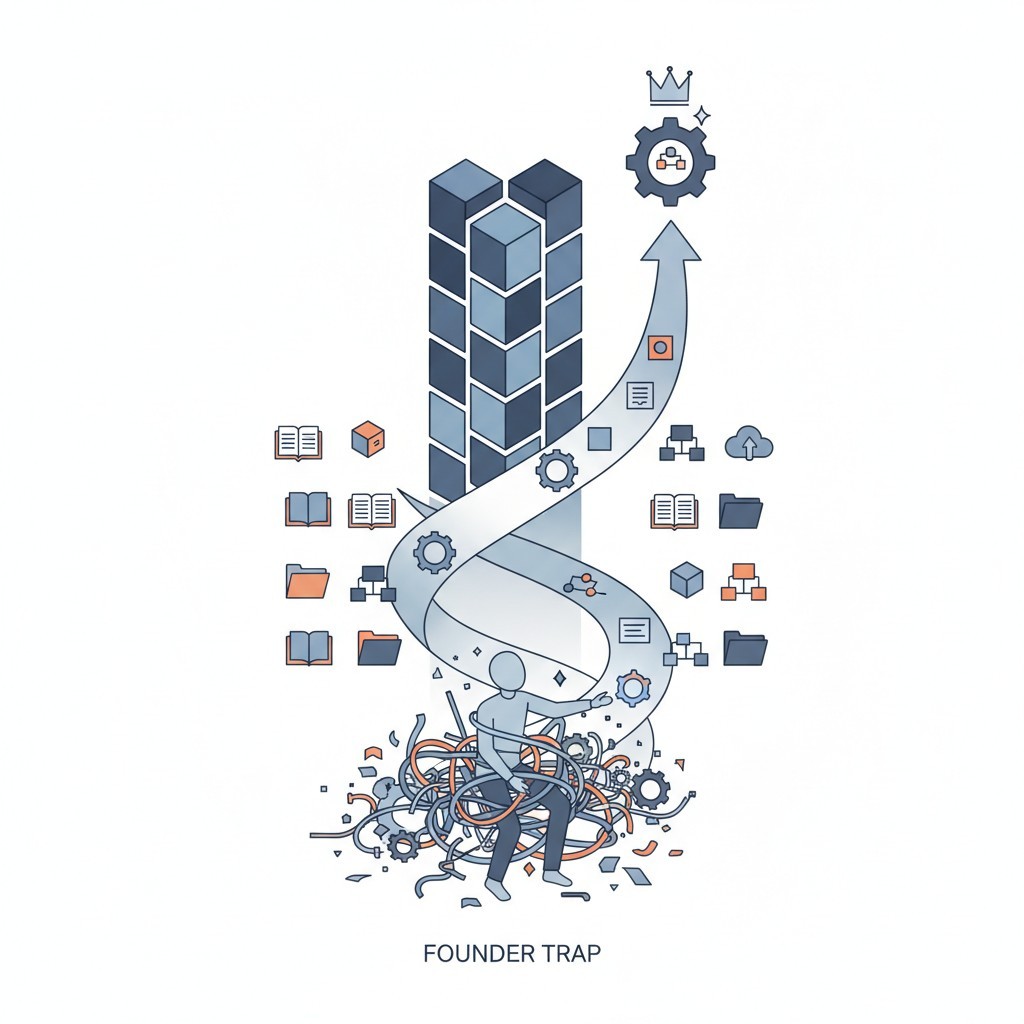
What is an SOP in Business? The Architecture to Escape the Founder Trap

I Built a 6 Million Dollar Company That Couldn't Run Without Me

How to Build a Business That Works (Hint: Systems!)

Employee Onboarding and Training: A Practical Guide for Small and Medium Businesses

How to Write Standard Operating Procedures for Manufacturing: A Field-Proven Blueprint

Essential Quality Control Practices for Operational Excellence

How Standardized Processes Drive Operational Efficiency and Growth