
Unlocking Cross-Departmental Collaboration for Business Efficiency
Listen to this article

Ryan Pease
FOLLOW

Most small and mid-sized businesses do not have a communication problem. They have a coordination problem. The difference matters, because buying another chat tool will not fix it. What breaks down as a business grows from 10 to 30 to 50 employees is not the willingness to work together — it is the absence of any system that makes working together predictable. That is what cross-departmental collaboration is really about, and it is exactly where many founder-led businesses quietly lose ground.
What Is Cross-Departmental Collaboration?
Cross-departmental collaboration is the structured coordination of effort, information, and decisions between two or more departments or functional areas within a business. It goes beyond standard teamwork, which typically happens within a single team or role group. Cross-departmental work requires people with different responsibilities, priorities, and vocabularies to produce a shared outcome.
In a business with 10 to 50 employees, departments are rarely formal divisions. They are clusters of responsibility: sales, delivery, operations, finance, client success. Cross-departmental collaboration happens every time one of those clusters hands work to another. A sales rep closes a deal and passes it to delivery. A project manager wraps up a client engagement and hands billing information to finance. A technician completes a service call and logs notes that the account manager needs for the next client conversation.
When those handoffs are informal, they depend entirely on the individuals involved. When they are documented and systematized, they become repeatable — regardless of who is in the role that day.
Benefits of Cross-Departmental Collaboration for SMBs
Growing businesses that invest in improving collaboration between departments see compounding returns across several areas:
Fewer dropped handoffs: When the path from one department to the next is clear, work does not stall at the boundary. Clients get faster responses, projects move forward, and nothing gets lost between roles.
Better decisions with shared context: When departments operate in isolation, each team makes decisions with incomplete information. Cross-departmental collaboration surfaces the full picture, leading to smarter choices at every level.
Reduced founder and key-person dependency: In most founder-led businesses, the owner is the informal bridge between departments. Structured collaboration removes that bottleneck by giving teams the information and authority to coordinate directly.
Higher employee engagement: People who understand how their work connects to the bigger picture are more motivated. Cross-functional visibility creates that connection without requiring the founder to explain it repeatedly.
Greater organizational agility: When teams can coordinate quickly and reliably, the business responds faster to client needs, market changes, and internal challenges.
Common Obstacles That Block Collaboration in Small Teams
Understanding the barriers is the first step toward removing them. For SMBs, the most common obstacles are structural, not cultural.
Knowledge Lives in People's Heads
In businesses under 50 employees, institutional knowledge is almost always informal. The senior project manager knows how the client intake process actually works. The operations lead knows which vendors need extra lead time. When that knowledge is not documented, it cannot be shared across departments consistently.
No Shared Language or Documented Processes
Without written processes, every department develops its own shortcuts, terminology, and expectations. What "ready to hand off" means to sales is often very different from what delivery expects to receive. That gap causes friction, rework, and frustration on both sides.
Unclear Ownership at Handoff Points
The most common place collaboration breaks down is not inside a department — it is between departments. When no one has documented who owns a task once it crosses a boundary, it either stalls or gets duplicated. Both outcomes are expensive.
How Cross-Departmental Collaboration Breaks Down When Everything Runs Through the Founder
This is the obstacle no enterprise article will mention, because it does not exist at scale. But for founder-led businesses in the $1 million to $10 million range, it is the most common collaboration failure mode.
When the founder is the de facto bridge between departments, cross-departmental collaboration is not a system — it is a personality. Sales asks the founder what delivery needs. Delivery asks the founder what sales promised. Operations asks the founder how finance wants things categorized. Every question flows through one person, and that person is also responsible for business development, client relationships, and strategic decisions.
The result is a bottleneck that looks like a communication problem but is actually a structural one. The fix is not to make the founder more available. It is to document the answers to those recurring questions so that teams can coordinate without needing to ask. SOPs, handoff checklists, and shared process documentation replace the founder as the information source — which is exactly how a business becomes scalable.
When Growth Breaks Collaboration: The Warning Signs SMB Owners Miss
Collaboration does not collapse all at once. It erodes gradually, and the warning signs often look like individual performance issues rather than systemic failures. Here is what to watch for at specific growth stages:
At 10 to 15 Employees
The team is small enough that informal communication still mostly works, but cracks are forming. Deadlines get missed because someone assumed another department had a task covered. Client information is inconsistently passed between sales and delivery. The founder is fielding questions that should have clear answers already.
At 20 to 30 Employees
The informal system breaks visibly. New hires do not have the tribal knowledge that long-tenured employees carry. Handoffs fail more frequently. Departments start protecting information because sharing it creates more work for them. The founder is now a daily bottleneck, and the business cannot grow without removing that constraint.
At 35 to 50 Employees
Without intervention, the business has now institutionalized its dysfunction. Departments have developed workarounds that make individual teams functional but make the overall operation fragmented. Client experience becomes inconsistent. Turnover increases because good employees are frustrated by the lack of clarity. Growth stalls or becomes chaotic.
The businesses that scale through these stages are the ones that build documented operating systems before the informal ones fully collapse.
Why SOPs Are the Missing Infrastructure for Cross-Departmental Collaboration
Most articles about improving team collaboration focus on culture, communication tools, and leadership behavior. Those things matter, but they are not infrastructure. They do not make collaboration repeatable when the people involved change, when the business is under pressure, or when a new employee joins and needs to understand how things work.
Standard operating procedures are the infrastructure that makes cross-departmental collaboration reliable. Here is why:
SOPs create a shared language. When every department documents its processes, the business develops consistent terminology. "Client onboarded" means the same thing to sales, delivery, and billing — because the SOP says exactly what that status requires.
SOPs define ownership at handoff points. A well-written SOP does not just describe what happens inside a department. It specifies what triggers the handoff, what information must be passed, who receives it, and what happens next. That clarity eliminates the gray zones where work disappears.
SOPs reduce reliance on tribal knowledge. When processes are documented, the business no longer depends on specific individuals to hold the system together. New employees can follow the same process a veteran employee would. Departments can coordinate without needing a translator.
SOPs make collaboration auditable. When something goes wrong at a handoff, documented processes make it easy to identify where the breakdown occurred and fix the system rather than blame the person.
For a founder-led SMB, implementing SOPs for cross-departmental handoffs is one of the highest-leverage investments available. It does not require a large team, expensive software, or a lengthy change management program. It requires identifying the critical handoff points and documenting them clearly enough that any team member can follow them.
How to Document Departmental Handoffs So Nothing Falls Through the Cracks
A handoff SOP does not need to be complicated. It needs to answer four questions clearly:
What triggers the handoff? Define the specific condition that initiates the transfer. "When the proposal is signed" is clearer than "when the deal closes."
What information must be passed? List the exact data, documents, or context the receiving department needs. Do not assume they know. Write it down.
Who is responsible for passing it, and who receives it? Name the roles, not the individuals. That way, the process survives turnover.
What does the receiving department do next? The handoff is not complete when information is sent — it is complete when the next step has been taken. Define that step.
Consider a marketing agency as an example. When a new client is signed, the account executive completes a client intake form that captures the client's goals, key contacts, budget, and timeline. That form is submitted to the project management system, which triggers an automatic task for the delivery lead to schedule a kickoff call within 48 hours. The delivery lead confirms receipt in the system, which closes the handoff loop. Nothing moves forward until that confirmation exists.
That is a documented handoff. It does not require the founder to be involved. It does not depend on the account executive and delivery lead having a good relationship. It works because the process is written down and followed.
Practical Strategies to Strengthen Cross-Departmental Collaboration
Establish Shared Goals and Visible Metrics
Departments that are measured only on their own outputs have little incentive to optimize for the business as a whole. Introducing shared metrics — client satisfaction scores, project completion rates, revenue per employee — gives every department a reason to care about how their work affects the next team in the chain.
Define Communication Channels and Escalation Paths
Departmental communication best practices start with structure, not volume. Decide which channel handles which type of communication. Routine updates go in the project management tool. Urgent issues go to a specific person via a specific channel. Escalations follow a documented path. When everyone knows the rules, information flows without creating noise.
Build Cross-Functional Checkpoints Into Recurring Workflows
Weekly or biweekly cross-departmental check-ins do not need to be long. A 20-minute standing meeting between department leads, focused on handoffs in progress and upcoming dependencies, prevents far more problems than it costs in time. The key is making it a recurring rhythm, not a reactive fire drill.
Use Technology to Support Documented Processes, Not Replace Them
Project management platforms, communication tools, and shared dashboards are valuable. But technology without documented processes creates a faster way to be disorganized. Implement tools after the processes are defined, not before. The tool should enforce the process, not substitute for it.
Building a Cross-Departmental Collaboration Framework for Your Business
A practical cross-department collaboration framework for an SMB has three components:
Mapped interdependencies: A visual or written inventory of where one department's output becomes another's input. This does not need to be a formal process map. A simple list of handoff points, organized by workflow, is enough to start.
Assigned owners for each handoff: Every handoff point has a named role responsible for initiating it and a named role responsible for confirming receipt. No gray zones.
A lightweight operating rhythm: Regular touchpoints between departments, documented meeting agendas, and a shared system for tracking work in progress. The rhythm should be sustainable with the current team, not aspirational for a team twice the size.
Cross-Departmental Collaboration Checklist for SMB Leaders
Use this audit to identify where collaboration is breaking down and what to fix first:
Quick Wins (Address Within 30 Days)
Identify the three most common handoff failures in the last 90 days
Document the trigger, information requirements, and owner for each of those handoffs
Establish a recurring cross-departmental check-in meeting with a standard agenda
Define one shared metric that every department is accountable for
Systemic Fixes (Address Within 90 Days)
Map all recurring handoff points across the business
Assign clear role-based ownership to each handoff
Create SOPs for the five highest-volume or highest-risk handoffs
Implement a shared project management system with standardized status labels
Document escalation paths for each department
Ongoing Tracking
Review handoff failure rates monthly
Update SOPs when processes change, not after problems occur
Survey team members quarterly on collaboration friction points
Audit founder involvement in cross-departmental coordination every six months and document any recurring questions as SOPs
Frequently Asked Questions About Cross-Departmental Collaboration
What is another word for cross-departmental collaboration?
Common synonyms include cross-functional collaboration, inter-departmental collaboration, cross-team coordination, and interdepartmental cooperation. In an SMB context, "operational alignment" is also used to describe the same concept when the focus is on process consistency rather than project-based teamwork.
What are the four types of collaboration?
The four commonly recognized types are: team collaboration (within a single group), cross-functional collaboration (across departments or disciplines), community collaboration (across organizations or networks), and strategic alliances (formal partnerships between separate entities). For most SMBs, cross-functional collaboration is the most immediately relevant type to develop.
What are the 5 C's of collaboration?
The 5 C's are Communication, Coordination, Cooperation, Collaboration, and Co-creation. In an operational context, the first three — communication, coordination, and cooperation — are foundational. Without them, the higher-order activities of collaboration and co-creation cannot happen reliably.
What are the 3 C's of collaboration?
The 3 C's most commonly referenced are Communication, Coordination, and Commitment. For SMBs, commitment is often the hardest to sustain without documented processes, because informal systems erode when the business is under pressure and people revert to working within their own lanes.
How do you improve collaboration between departments?
The most effective approach for SMBs is to treat collaboration as an operational problem, not a cultural one. That means documenting handoff points, assigning clear ownership, establishing shared metrics, and creating recurring cross-departmental touchpoints. Culture follows structure — when the system makes collaboration easy, the behavior follows.
When should a business formalize its collaboration processes?
The right time is before the informal system breaks, not after. For most businesses, that means documenting cross-departmental processes when headcount reaches 10 to 15 employees, when handoff failures become recurring, or when the founder realizes they are the primary bridge between departments. Waiting until the pain is severe makes the fix more disruptive and more expensive.
Building the Operating System That Makes Collaboration Stick
Cross-departmental collaboration is not a soft skill initiative. It is an operational infrastructure problem, and it has an operational infrastructure solution. For founder-led businesses growing through the $1 million to $10 million range, the gap between where collaboration is and where it needs to be is almost always a documentation gap. The knowledge exists. The willingness exists. What is missing is a system that captures how the business actually works and makes that system accessible to every team member who needs it.
SOPs, documented handoffs, and a lightweight operating rhythm are not bureaucratic overhead. They are what allow a business to grow without the founder becoming a permanent bottleneck, without experienced employees becoming single points of failure, and without new hires spending months learning what should have been written down years ago. That is what operational excellence looks like at the SMB level, and it starts with treating cross-departmental collaboration as a system worth building.
Check out other interesting articles here 👇

Why Free Acceptable Use Policy Templates Destroy Enterprise Value
The Hidden Tax: How Operational Chaos is Bleeding Your Business Dry

The Architecture of Operational Freedom: Engineering a Business That Runs Without You

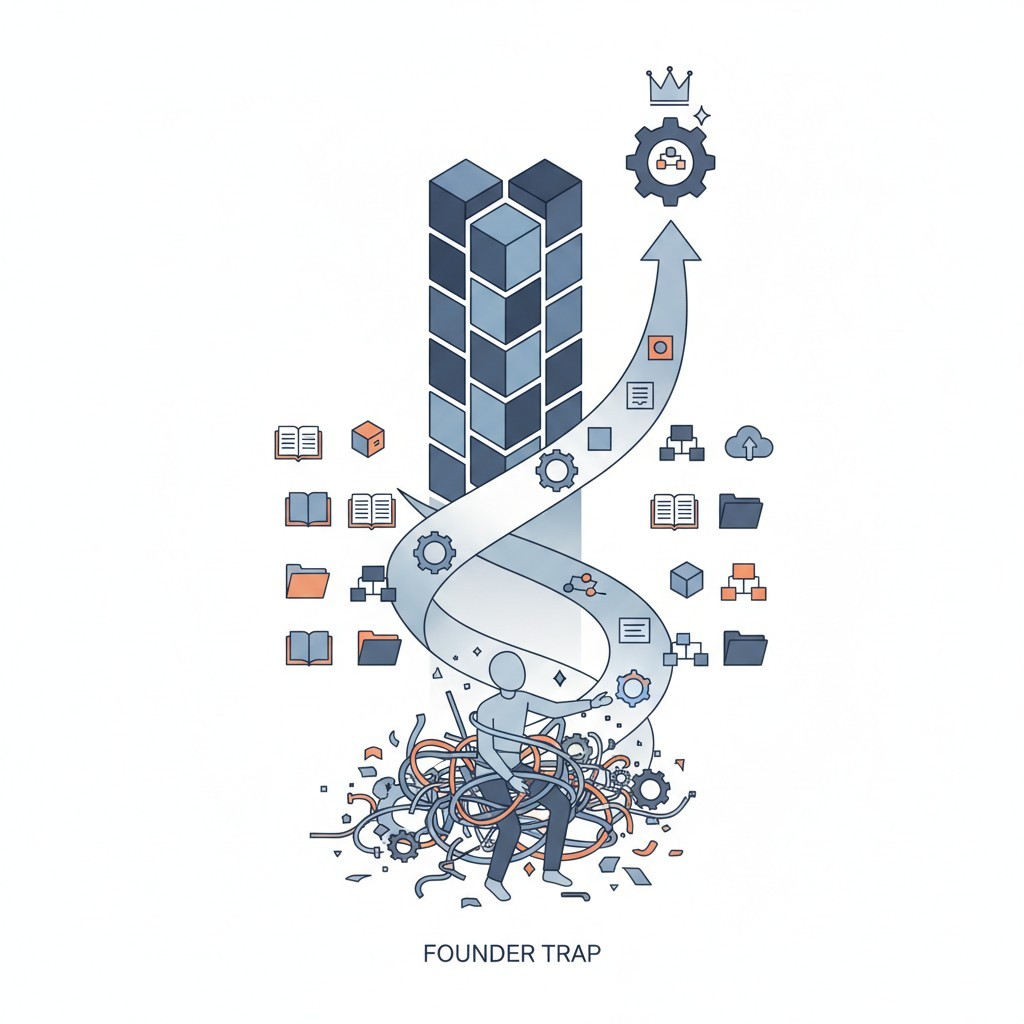
What is an SOP in Business? The Architecture to Escape the Founder Trap

I Built a 6 Million Dollar Company That Couldn't Run Without Me

How to Build a Business That Works (Hint: Systems!)

Employee Onboarding and Training: A Practical Guide for Small and Medium Businesses

How to Write Standard Operating Procedures for Manufacturing: A Field-Proven Blueprint

Essential Quality Control Practices for Operational Excellence

How Standardized Processes Drive Operational Efficiency and Growth