
I Built a 6 Million Dollar Company That Couldn't Run Without Me
Listen to this article

Ryan Pease
FOLLOW
What Systemizing My Business Actually Taught Me
Submitted to the SOP Mojo Media Team
For years, I believed my business worked because I was good at what I did. I started my company with competence, grit, and a strong reputation in our industry. I knew how to scope projects. I knew which vendors would perform under pressure. I knew how to read between the lines in a contract and where margins would quietly erode if we weren’t careful. In the early days, that knowledge was my edge. When we hit $1M in revenue, it felt validating. At $3M, I felt unstoppable. By the time we crossed $6M, I assumed we were stable. We weren’t.
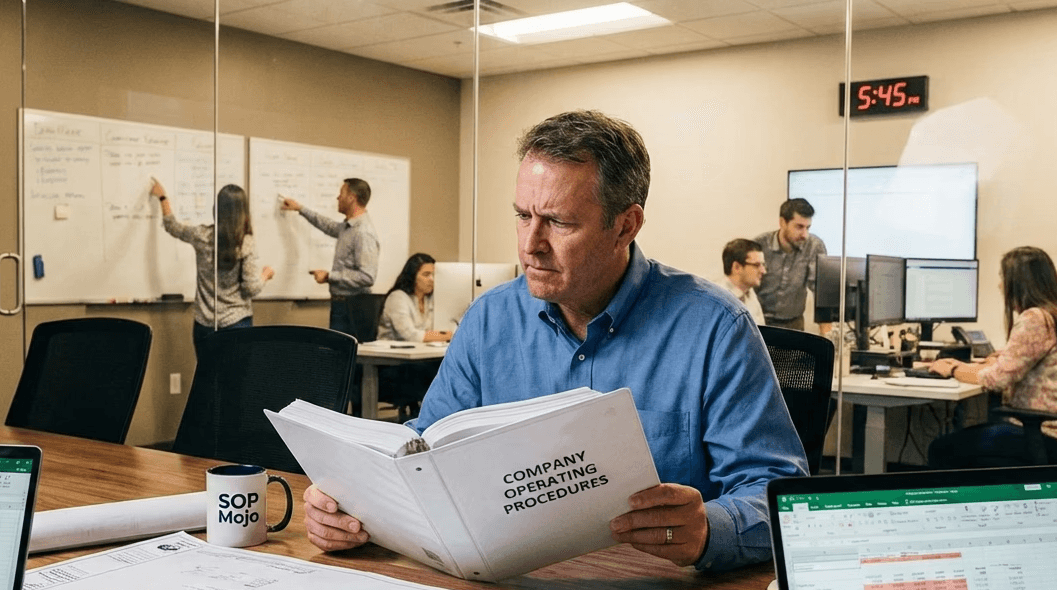
From the outside, the company looked mature. We had nearly 30 employees, solid revenue, and long-standing clients. Internally, however, everything still depended on me. If an estimate felt risky, it landed on my desk. If a vendor relationship became tense, I stepped in. If a project manager hesitated on a decision, I was the backstop. If I left town for more than a few days, performance dipped. I told myself this was leadership.
It wasn’t. It was dependency disguised as control.
The Illusion of Control
For a long time, I believed that my involvement was protecting the business. If I reviewed every major estimate, margins would hold. If I handled sensitive client conversations, quality would stay high. If I trained new hires personally, standards wouldn’t slip. Each decision felt responsible in isolation. But collectively, they created a system where knowledge was centralized and fragile.
I was the operating system.
That sounds impressive until you realize what it means. It means if I get sick, the system slows. If I’m distracted, the system weakens. If I ever want to sell, the system becomes risky. The truth hit me slowly: I hadn’t built a scalable company. I had built a high-paying job with overhead.
The $48,000 Wake-Up Call
The moment that forced me to confront this wasn’t philosophical. It was financial. Two of my project managers scoped similar municipal jobs within weeks of each other. Both were competent. Both were experienced. Their estimates differed in assumptions about labor allocation, equipment timing, and vendor coordination. Neither was careless. They simply made judgment calls based on what they believed was right. The projects should have produced comparable margins. They didn’t.
We absorbed roughly $48,000 in avoidable margin compression. When I dug into it, the issue wasn’t talent. It was variability. We didn’t have a standardized estimating framework. We didn’t have a documented scope checklist. We didn’t have defined decision thresholds. We had expectations. And those expectations lived in my head. That was the moment I understood something uncomfortable: My knowledge was not an asset. It was a bottleneck.

Why I Resisted SOPs for So Long
I had read about SOPs before. I had seen articles from operational platforms outlining the benefits of documentation, standardization, and knowledge transfer. On paper, it all made sense. In practice, I resisted.
Part of it was ego. If I’m honest, I liked being the person who “just knew.” Part of it was fear. Writing things down felt like giving away leverage. Part of it was time. It was always faster to answer the question than to build a system.
But speed is not scalability. When everything flows through you, growth amplifies complexity. Complexity amplifies fragility.
I realized that I was optimizing for short-term efficiency while undermining long-term durability.
The Shift: From Personality to Process
When I committed to systemizing the company, I made a mistake at first. I sat down alone and tried to document how things “should” work. The documents were technically clean but practically useless. My team ignored them.
The breakthrough came when I stopped dictating theory and started documenting reality. I interviewed project managers. I shadowed estimators. I mapped out the actual sequence of steps we followed on real projects. I captured the friction points and decision forks.
Only after documenting what truly happened did we begin refining it. This distinction matters. Systems that ignore lived experience will not survive contact with operators.
We built processes that reflected how we worked, then tightened them. Over time, every core workflow included five elements:
A single accountable owner
A defined trigger
Clear, sequential execution steps
Decision criteria for common judgment calls
Explicit outputs and handoffs
For the first time, our company’s knowledge was not dependent on memory.
It was visible.
Give Your Business Some
Mojo
Sign up to receive more goodness from SOP Mojo
What Actually Changed
The results were not dramatic at first. There was no overnight transformation. What changed was subtle. Questions that used to land on my desk were answered internally because the guidance existed. Estimates began to converge in structure and logic. Vendor selection followed defined criteria instead of personal preference.
Onboarding improved significantly. Before systemization, new project managers needed six to eight months before I trusted them fully. After standardizing our core processes—estimating, procurement, change orders, billing cadence—new hires reached meaningful autonomy in roughly twelve weeks. That alone changed our growth trajectory. But the most important shift wasn’t operational. It was psychological. Delegation stopped feeling reckless. It felt controlled.
The Enterprise Value Conversation
I used to say I had no interest in selling the business. Discussions about exit value felt hypothetical.
Then a strategic buyer approached us.
During diligence, the question that surfaced repeatedly was simple: “How dependent is the business on you?”
Two years earlier, that question would have unsettled me.
This time, I was able to show documented processes, role ownership, decision frameworks, and standardized reporting structures.
The conversation changed.
The business was no longer perceived as an extension of my personal competence. It was perceived as a transferable system.
That difference materially impacts valuation.
Predictability reduces risk. Reduced risk increases multiples.
Systemization didn’t just buy me time freedom. It increased enterprise value.
The Personal Dividend
Two years after that $48,000 margin hit, I took a three-week vacation.
Production didn’t dip.
Estimates remained consistent. Projects stayed on schedule. Clients received proactive communication.
Nothing dramatic happened.
And that was the breakthrough.
For years, my absence created instability. This time, my absence created nothing.
No chaos. No fire drills. No heroics required.
The company ran.
That is when I understood what systemization really provides.
It is not about paperwork.
It is about durability.
What I Now Believe About Business
Looking back, I see clearly that expertise builds a company, but systems sustain it.
Talent without structure creates variability.
Structure without ownership creates bureaucracy.
But structure with ownership creates reliability.
If your business breaks when you leave, you do not own an asset. You own a responsibility.
When knowledge lives exclusively in your head, it cannot compound. It cannot scale. It cannot transfer.
When knowledge is standardized, owned by roles, and embedded into execution, the business becomes something different.
Repeatable.
Reliable.
Scalable.
Sellable.
That transformation does not happen through inspiration. It happens through disciplined documentation, clear ownership, and operational accountability.
It is not glamorous work.
It is foundational work.
And it changed my company more than any marketing campaign, hiring decision, or pricing adjustment ever did.
If there is one lesson I would submit to the SOP Mojo Media Team for other operators reading this, it is this:
Build the playbook before growth forces you to.
Turn what you know into systems.
Because the day you want freedom, optionality, or leverage, you will discover that knowledge inside your head is not an asset.
It is a liability.
Systems are the asset.
And assets create freedom.
Ready to Build Yours?
If this story resonates, and you see your business somewhere in these pages, you don’t need more motivation—you need a plan.
At SOP Mojo, we help SMB owners turn founder knowledge into documented systems that create operational freedom and enterprise value. Whether you want a done-for-you buildout or the frameworks to execute it yourself, the outcome is the same:
A business that runs without you.
Build SOPs. Buy your time back.
If you're ready to start your systemization journey, visit sopmojo.com and begin building your playbook.
Check out other interesting articles here 👇

Why Free Acceptable Use Policy Templates Destroy Enterprise Value
The Hidden Tax: How Operational Chaos is Bleeding Your Business Dry

The Architecture of Operational Freedom: Engineering a Business That Runs Without You

What is an SOP in Business? The Architecture to Escape the Founder Trap
I Built a 6 Million Dollar Company That Couldn't Run Without Me
How to Build a Business That Works (Hint: Systems!)
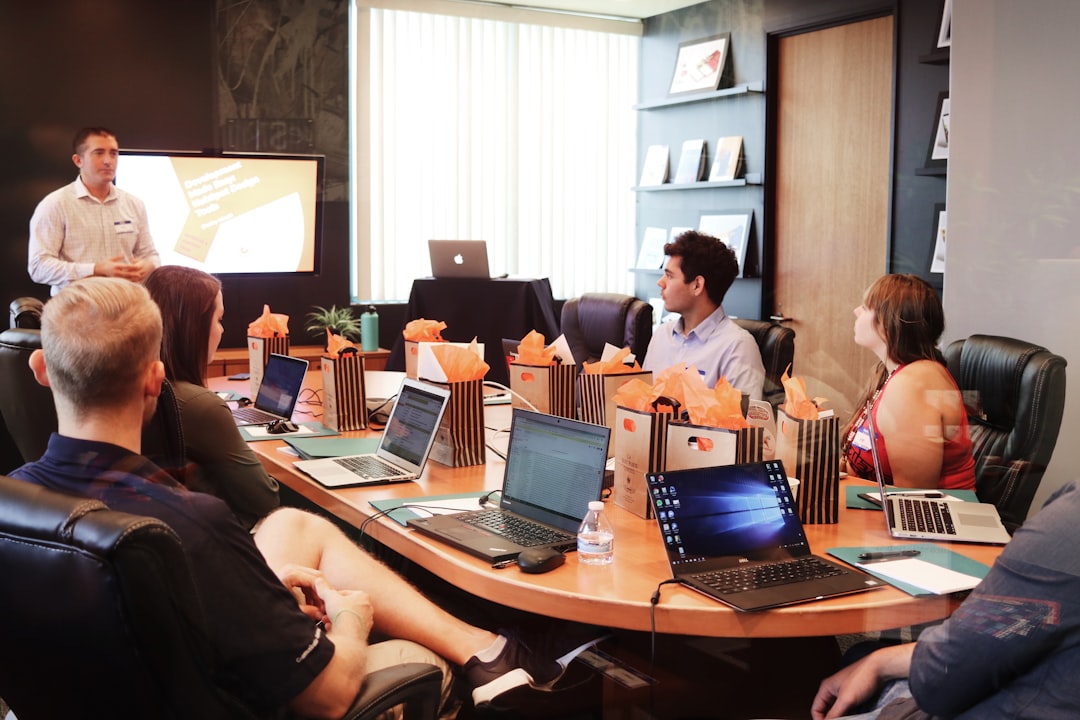
Employee Onboarding and Training: A Practical Guide for Small and Medium Businesses

How to Write Standard Operating Procedures for Manufacturing: A Field-Proven Blueprint

Essential Quality Control Practices for Operational Excellence

How Standardized Processes Drive Operational Efficiency and Growth